Retention of seized property survives where recorded reasons support proceeds of crime, while stayed investigation periods are excluded from limitatio...
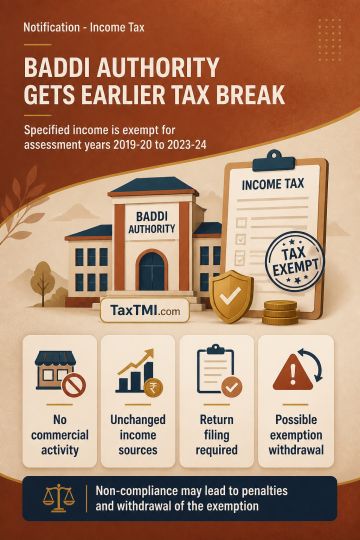
Specified income of Baddi Barotiwala Nalagarh Development Authority receives conditional tax exemption, retrospectively covering its designated assess...
Specified development authority income receives retrospective tax exemption, subject to non-commercial activity, unchanged income sources, and return-...
Unified Brand India framework introduces voluntary Trust Mark certification and funding support for export branding, packaging and global promotional ...
Origin Declaration authentication governs preferential tariff claims under India-UK CETA, requiring a validated reference number before import clearan...
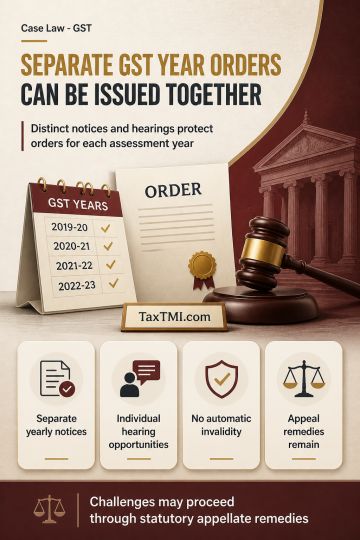
Separate assessment orders for different years remain valid when distinct notices and hearing opportunities prevent prejudice from combined proceeding...
The Competition Commission of India (CCI) examined whether Indian Rare Earths Limited (IREL), a public sector undertaking, contravened Section 4 of the Competition Act, 2002, by abusing its dominant position in the market for mining and supply of Beach Sand Sillimanite in India. CCI held that IREL is an 'enterprise' under the Act and the relevant geographic market is India. Despite IREL's high market share, CCI found no evidence of excessive or discriminatory pricing by IREL in violation of Sections 4(2)(a)(ii) and 4(2)(a)(i) respectively. CCI observed that differential pricing based on quantity, customer relationships, and assured offtake is a normal business practice. Consequently, CCI concluded that IREL did not contravene the provisions of Section 4 and directed the matter to be closed, while addressing confidentiality requests from parties.
The Competition Commission of India (CCI) examined whether Indian Rare Earths Limited (IREL), a public sector undertaking, contravened Section 4 of the Competition Act, 2002, by abusing its dominant position in the market for mining and supply of Beach Sand Sillimanite in India. CCI held that IREL is an 'enterprise' under the Act and the relevant geographic market is India. Despite IREL's high market share, CCI found no evidence of excessive or discriminatory pricing by IREL in violation of Sections 4(2)(a)(ii) and 4(2)(a)(i) respectively. CCI observed that differential pricing based on quantity, customer relationships, and assured offtake is a normal business practice. Consequently, CCI concluded that IREL did not contravene the provisions of Section 4 and directed the matter to be closed, while addressing confidentiality requests from parties.
Note: It is a system-generated summary and is for quick reference only.
 TaxTMI
  TaxTMI
 of 4807















 Join Channel


