Online bond platforms may offer overseas-regulated products and tax-specific bonds subject to disclosures, compliance safeguards and revised complianc...
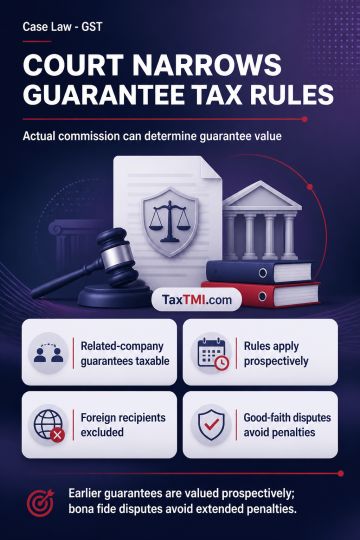
Corporate guarantee valuation permits actual ascertainable commission while barring retroactive application and extended-period penalties for bona fid...
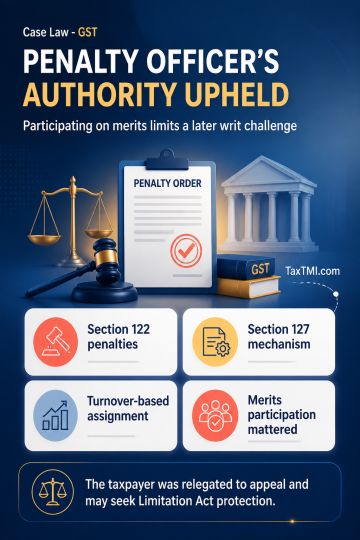
Proper-officer jurisdiction under UPGST penalty provisions upheld; participation on merits prevents bypassing the statutory appellate remedy through w...
Transitioned CENVAT credit may validly satisfy mandatory pre-deposit requirements for legacy service tax appeals through Electronic Credit Ledger debi...
Building-plan sanction charges require statutory authority; unauthorised fees and GST were quashed, while labour cess must follow prescribed collectio...
Pure-agent exclusion fails where hotel booking facilitators receive third-party services themselves, making entire customer consideration taxable as r...
The High Court dealt with a case involving money laundering through the sale of illegally printed lottery tickets. The court held that the Prevention of Money Laundering Act (PMLA) aims to protect the economic interests of the nation, and its implementation should align with this legislative intent. The court found prima facie evidence of offenses under the Indian Penal Code, including cheating, forgery, and criminal conspiracy, constituting predicate offenses for money laundering under the PMLA. The state investigating agency had initially registered the predicate offense, but later filed a closure report, which the court deemed suspicious and an attempt to bury the case on extraneous considerations. The High Court set aside the closure report and directed the state agency and the Enforcement Directorate to proceed with the case in tandem, ensuring a fair trial uninfluenced by the court's observations.
The High Court dealt with a case involving money laundering through the sale of illegally printed lottery tickets. The court held that the Prevention of Money Laundering Act (PMLA) aims to protect the economic interests of the nation, and its implementation should align with this legislative intent. The court found prima facie evidence of offenses under the Indian Penal Code, including cheating, forgery, and criminal conspiracy, constituting predicate offenses for money laundering under the PMLA. The state investigating agency had initially registered the predicate offense, but later filed a closure report, which the court deemed suspicious and an attempt to bury the case on extraneous considerations. The High Court set aside the closure report and directed the state agency and the Enforcement Directorate to proceed with the case in tandem, ensuring a fair trial uninfluenced by the court's observations.
Note: It is a system-generated summary and is for quick reference only.
 TaxTMI
 of 4800















 Join Channel


 TaxTMI