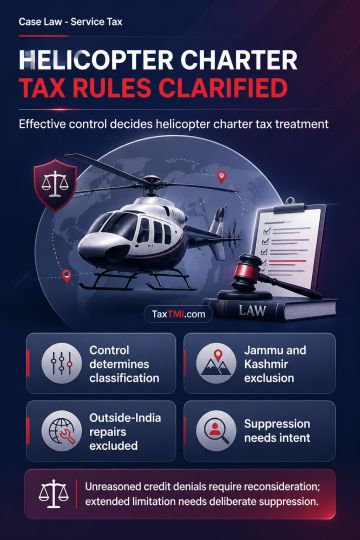
Helicopter charter classification requires effective control analysis, while territorial performance, reasoned credit orders and wilful suppression de...
Specified fund definition expands PAN exemption eligibility for registered alternative investment funds and qualifying International Financial Service...
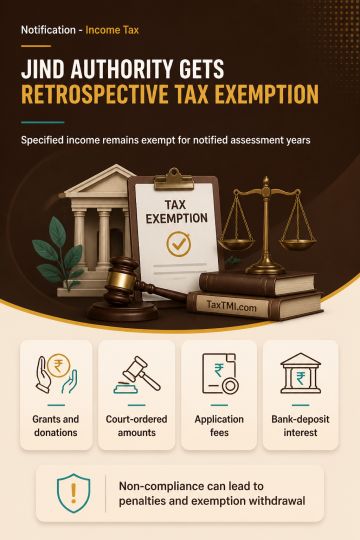
Tax exemption for specified legal-services authority income applies retrospectively, subject to non-commercial activity, unchanged income sources, and...
Approved resolution plans extinguish unsubmitted pre-approval tax claims, preventing later recovery outside the insolvency process and preserving a cl...
The High Court dealt with a case involving money laundering through the sale of illegally printed lottery tickets. The court held that the Prevention of Money Laundering Act (PMLA) aims to protect the economic interests of the nation, and its implementation should align with this legislative intent. The court found prima facie evidence of offenses under the Indian Penal Code, including cheating, forgery, and criminal conspiracy, constituting predicate offenses for money laundering under the PMLA. The state investigating agency had initially registered the predicate offense, but later filed a closure report, which the court deemed suspicious and an attempt to bury the case on extraneous considerations. The High Court set aside the closure report and directed the state agency and the Enforcement Directorate to proceed with the case in tandem, ensuring a fair trial uninfluenced by the court's observations.
The High Court dealt with a case involving money laundering through the sale of illegally printed lottery tickets. The court held that the Prevention of Money Laundering Act (PMLA) aims to protect the economic interests of the nation, and its implementation should align with this legislative intent. The court found prima facie evidence of offenses under the Indian Penal Code, including cheating, forgery, and criminal conspiracy, constituting predicate offenses for money laundering under the PMLA. The state investigating agency had initially registered the predicate offense, but later filed a closure report, which the court deemed suspicious and an attempt to bury the case on extraneous considerations. The High Court set aside the closure report and directed the state agency and the Enforcement Directorate to proceed with the case in tandem, ensuring a fair trial uninfluenced by the court's observations.
Note: It is a system-generated summary and is for quick reference only.
 TaxTMI
 of 4805














 Join Channel


 TaxTMI
