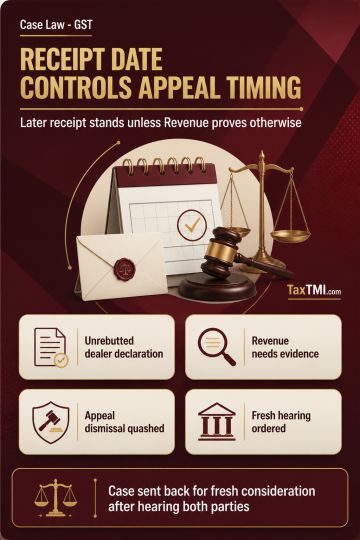
Extended limitation fails without specific suppression allegations, while overseas employee secondment remains taxable as manpower supply within norma...
Time-share accommodation classification excludes Club or Association Service where purchasers receive contractual occupancy rights without genuine mem...
CENVAT credit for trading requires reversal, while taxable-service rental credit remains proportionately available and limitation issues await resolut...
Vicarious liability for dishonoured company cheques may extend to non-signatory directors where complaints contain foundational responsibility avermen...
The High Court dealt with a case involving money laundering through the sale of illegally printed lottery tickets. The court held that the Prevention of Money Laundering Act (PMLA) aims to protect the economic interests of the nation, and its implementation should align with this legislative intent. The court found prima facie evidence of offenses under the Indian Penal Code, including cheating, forgery, and criminal conspiracy, constituting predicate offenses for money laundering under the PMLA. The state investigating agency had initially registered the predicate offense, but later filed a closure report, which the court deemed suspicious and an attempt to bury the case on extraneous considerations. The High Court set aside the closure report and directed the state agency and the Enforcement Directorate to proceed with the case in tandem, ensuring a fair trial uninfluenced by the court's observations.
The High Court dealt with a case involving money laundering through the sale of illegally printed lottery tickets. The court held that the Prevention of Money Laundering Act (PMLA) aims to protect the economic interests of the nation, and its implementation should align with this legislative intent. The court found prima facie evidence of offenses under the Indian Penal Code, including cheating, forgery, and criminal conspiracy, constituting predicate offenses for money laundering under the PMLA. The state investigating agency had initially registered the predicate offense, but later filed a closure report, which the court deemed suspicious and an attempt to bury the case on extraneous considerations. The High Court set aside the closure report and directed the state agency and the Enforcement Directorate to proceed with the case in tandem, ensuring a fair trial uninfluenced by the court's observations.
Note: It is a system-generated summary and is for quick reference only.
 TaxTMI
 of 4801













 Join Channel


 TaxTMI