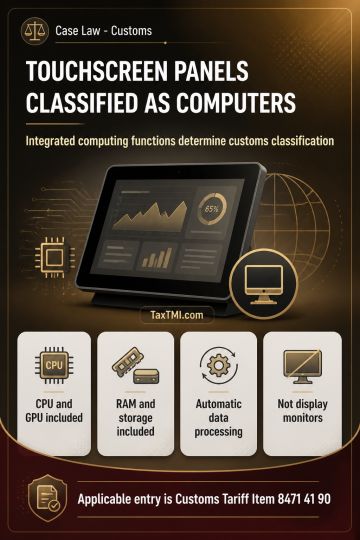
Interactive touchscreen panels with integrated computing functions fall under automatic data-processing machines rather than display monitors for cust...
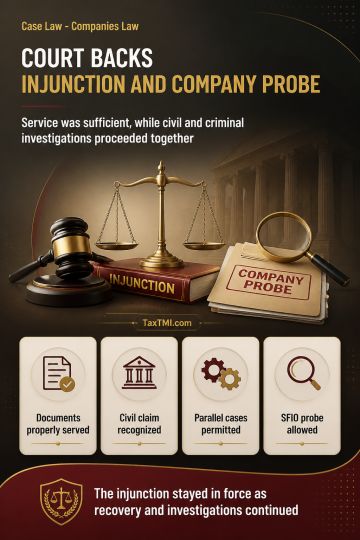
Ex parte injunction service requirements were substantially met, while civil recovery and SFIO investigation into provident fund defalcation continued...
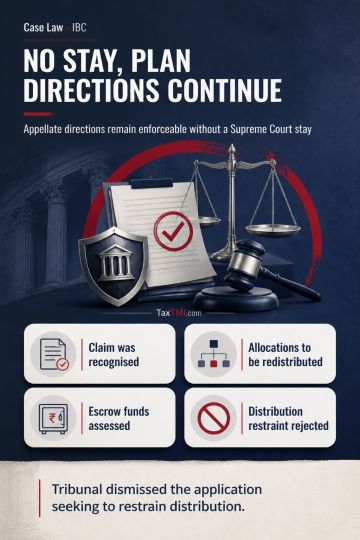
Enforcement of resolution-plan directions continues without a Supreme Court stay, preventing suspension of redistribution and escrowed-fund distributi...
Third-party ownership claims over attached property require Special Court adjudication where purchasers lack registered sale deeds and bona fides rema...
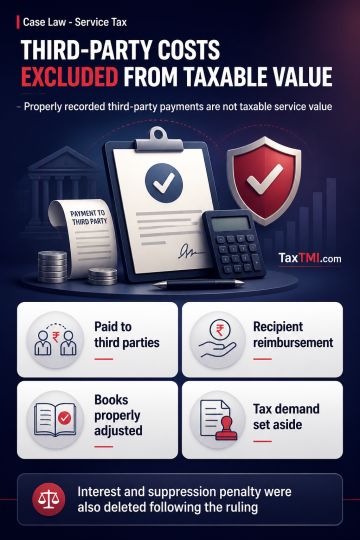
Pure-agent reimbursements in clearing and forwarding services are excluded from taxable value when qualifying third-party payments are properly record...
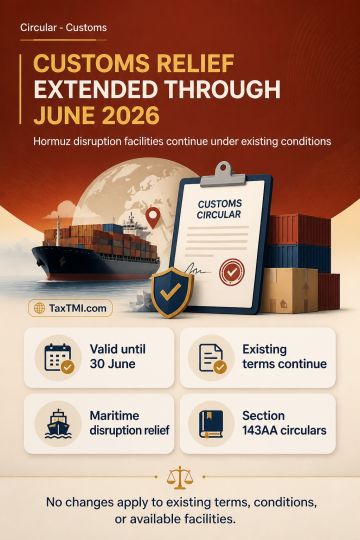
Customs relief for Strait of Hormuz maritime disruptions remains available, with existing conditions continuing unchanged through the extended validit...
Denial of CENVAT credit for expenses incurred at unregistered branches and the demand raised by revenue authorities. The key points are: The appellant undertakes technical testing and analysis services on blood samples obtained during human trials. The final analysis report is prepared at the Ahmedabad office, although samples are collected from unregistered branches. The Tribunal held that CENVAT credit cannot be denied merely because samples are collected from unregistered branches, as the entire activity is accounted for and carried out from the registered Ahmedabad office. Centralized registration is not a prerequisite for availing CENVAT credit; the criteria is that the input service should be used for providing output service and service tax should be paid. As all activities are ultimately attributed to the Ahmedabad office, availment of CENVAT credit there is valid. The demand based on the difference between taxable income in profit and loss account and taxable value declared in ST-3 returns is unsustainable unless revenue establishes the nature of service for the difference. The appellant provided reconciliation and paid service tax on excess amount. Demands based on alleged totaling mistakes and short payment of service tax are unsustainable as the appellant provided explanations and evidence of correct payment. The demand based on debit notes issued by Wockhardt Ltd. is unsustainable.
Denial of CENVAT credit for expenses incurred at unregistered branches and the demand raised by revenue authorities. The key points are: The appellant undertakes technical testing and analysis services on blood samples obtained during human trials. The final analysis report is prepared at the Ahmedabad office, although samples are collected from unregistered branches. The Tribunal held that CENVAT credit cannot be denied merely because samples are collected from unregistered branches, as the entire activity is accounted for and carried out from the registered Ahmedabad office. Centralized registration is not a prerequisite for availing CENVAT credit; the criteria is that the input service should be used for providing output service and service tax should be paid. As all activities are ultimately attributed to the Ahmedabad office, availment of CENVAT credit there is valid. The demand based on the difference between taxable income in profit and loss account and taxable value declared in ST-3 returns is unsustainable unless revenue establishes the nature of service for the difference. The appellant provided reconciliation and paid service tax on excess amount. Demands based on alleged totaling mistakes and short payment of service tax are unsustainable as the appellant provided explanations and evidence of correct payment. The demand based on debit notes issued by Wockhardt Ltd. is unsustainable.
Note: It is a system-generated summary and is for quick reference only.
 TaxTMI
 of 4803






 Join Channel


 TaxTMI