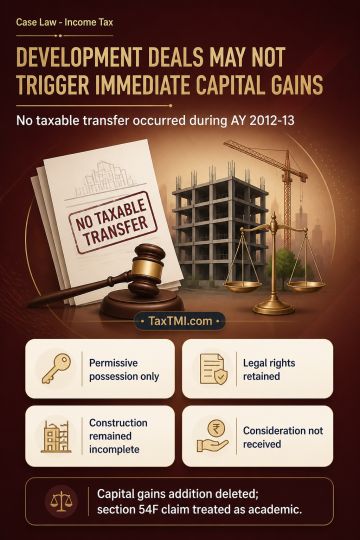
Development agreements require legal possession or effective enjoyment for capital gains transfer; permissive possession and deferred consideration de...
Prolonged sterilisation of development rights supports capital-gains treatment, while business-income disallowances cannot govern capital-gains comput...
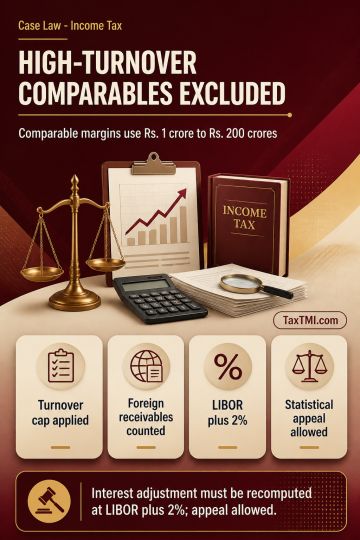
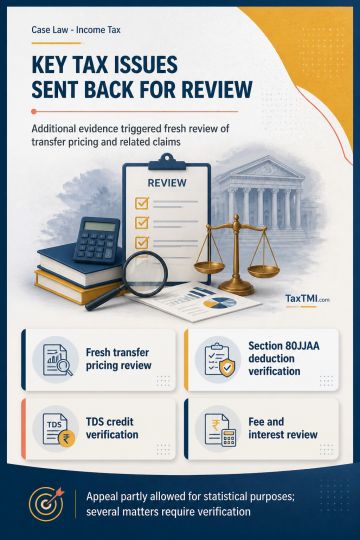
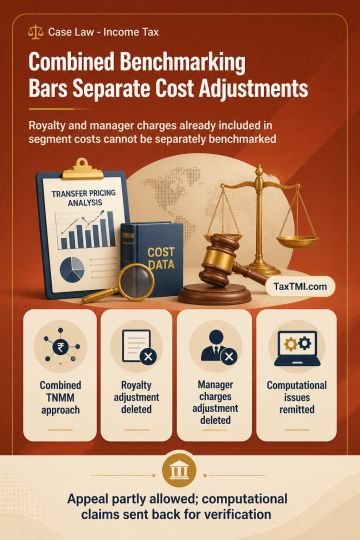
Additional evidence in transfer pricing dispute leads to fresh examination, while tax deductions, TDS credit, fee and refund interest require verifica...
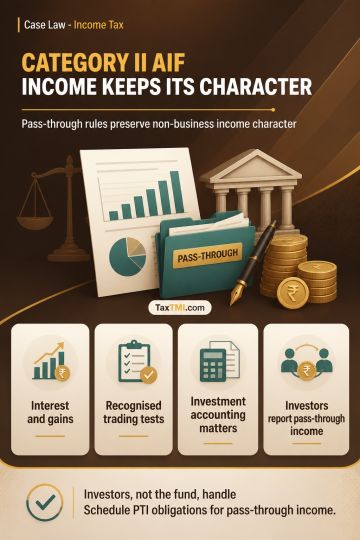
Category II AIF pass-through taxation preserves non-business income character; investment receipts cannot be reclassified without applying recognised ...
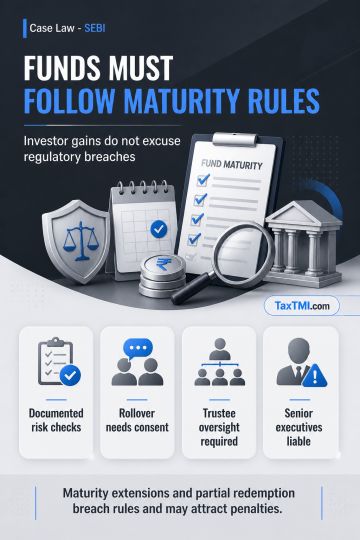
Mutual fund maturity rules require proper rollover, redemption, disclosure, and due diligence; investor gains cannot excuse regulatory breaches or pen...
Claim of second sale exemption and the imposition of penalty u/s 12(5)(iii). The High Court held that when the burden was on the dealer to prove the factum of second sale, the respondent had failed to discharge this burden by proving the actual first sale, which was a prerequisite for claiming the exemption. The Tribunal had erroneously shifted the burden from the dealer to the revenue. Relying on previous decisions, the High Court reiterated that the burden of proving an earlier taxable sale was on the assessee. Regarding the penalty u/s 12(5)(iii), the Court held that since the respondent had wilfully suppressed taxable turnover and failed to file returns, the Assessing Officer was justified in imposing the penalty, and the Tribunal's decision to delete the penalty was untenable. Consequently, the High Court set aside the Tribunal's order and restored the assessment order confirmed by the appellate authority.
Claim of second sale exemption and the imposition of penalty u/s 12(5)(iii). The High Court held that when the burden was on the dealer to prove the factum of second sale, the respondent had failed to discharge this burden by proving the actual first sale, which was a prerequisite for claiming the exemption. The Tribunal had erroneously shifted the burden from the dealer to the revenue. Relying on previous decisions, the High Court reiterated that the burden of proving an earlier taxable sale was on the assessee. Regarding the penalty u/s 12(5)(iii), the Court held that since the respondent had wilfully suppressed taxable turnover and failed to file returns, the Assessing Officer was justified in imposing the penalty, and the Tribunal's decision to delete the penalty was untenable. Consequently, the High Court set aside the Tribunal's order and restored the assessment order confirmed by the appellate authority.
Note: It is a system-generated summary and is for quick reference only.
 TaxTMI
 of 4807





 Join Channel


 TaxTMI