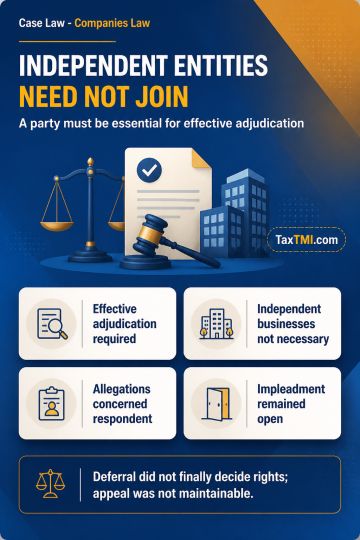
Necessary-party requirements limit impleadment of independent entities, while deferred consideration does not create an appealable adverse determinati...
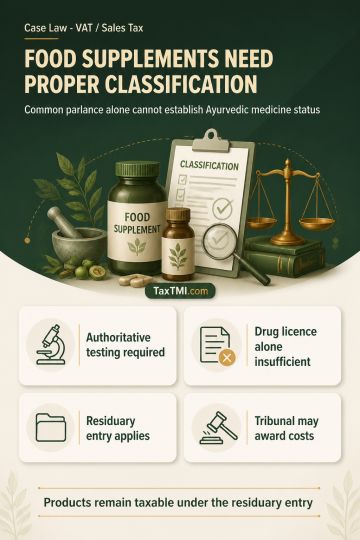
Food supplement classification requires common parlance and authoritative tests, preventing treatment as proprietary Ayurvedic medicines without suppo...
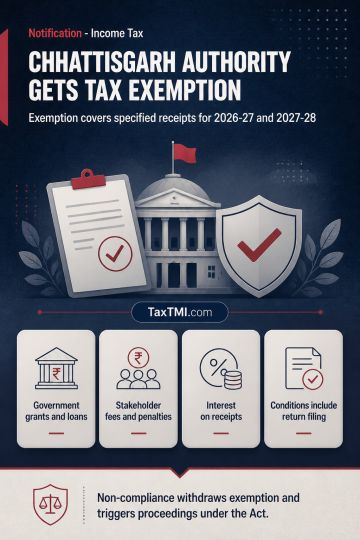
Specified regulatory authority income receives conditional tax exemption, subject to non-commercial activity, unchanged income character, and return f...
Tax exemption for regulatory authority income applies retrospectively, subject to non-commercial activity, unchanged income sources, and return-filing...
Input tax credit conditions remain constitutionally valid, with eligible recipient claims considered under GST circulars and retrospective filing dead...
The case pertains to the import of Areca Nuts found to be substandard and unfit for human consumption due to visible fungal growth and musty odor, violating food safety regulations. The Revenue alleged malpractice by importers in mixing consignments to evade customs duty. The Tribunal set aside the absolute confiscation order, allowing re-export of the goods as permitted under regulations. The High Court upheld the Tribunal's decision, finding it within its scope to examine the legality and propriety of the authority's discretion. The Court considered the Areca Nuts usable for ancillary and industrial purposes, justifying re-export. It also upheld the reduction of fines imposed on the importer, citing lack of importer's participation in receiving substandard goods. The Court found the Tribunal's reasoning of preventing wasteful outflow of foreign exchange to be sound public policy. Consequently, the Revenue's appeals were dismissed, and re-export of the goods was ordered if not already allowed.
The case pertains to the import of Areca Nuts found to be substandard and unfit for human consumption due to visible fungal growth and musty odor, violating food safety regulations. The Revenue alleged malpractice by importers in mixing consignments to evade customs duty. The Tribunal set aside the absolute confiscation order, allowing re-export of the goods as permitted under regulations. The High Court upheld the Tribunal's decision, finding it within its scope to examine the legality and propriety of the authority's discretion. The Court considered the Areca Nuts usable for ancillary and industrial purposes, justifying re-export. It also upheld the reduction of fines imposed on the importer, citing lack of importer's participation in receiving substandard goods. The Court found the Tribunal's reasoning of preventing wasteful outflow of foreign exchange to be sound public policy. Consequently, the Revenue's appeals were dismissed, and re-export of the goods was ordered if not already allowed.
Note: It is a system-generated summary and is for quick reference only.
 TaxTMI
 of 4805










 Join Channel


 TaxTMI