Defined public benefit can retain charitable character; registration renewal requires examining genuine activities and legal compliance, not surplus a...
Capital reduction is distinct from share buy-back, preventing buy-back tax; restructuring interest and related business deductions also survive scruti...
Transfer pricing and tax deductions upheld on established principles, while employee contributions and warranty provisions returned for fresh examinat...
Captive transfer pricing relies on industrial consumer tariffs, while genuine quotations can benchmark effluent treatment transfers under the Other Me...
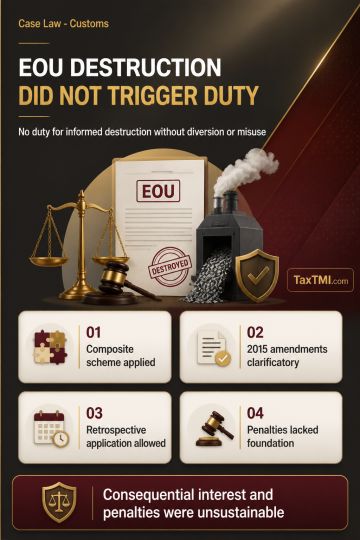
Specific tariff classification for ophthalmic instruments and extended limitation principles determine the treatment of duty demands, confiscation, an...
The court held that the sum received under the co-marketing agreement was a capital receipt, not a revenue receipt. The intention of the parties gathered from the agreement's language is crucial. The Supreme Court's test distinguishes capital receipts that impair the trading structure or income source from revenue receipts that are normal business incidents. The agreement was a negative/restrictive covenant where the payment compensated for surrendering rights in capital assets like patents and trademarks. This impaired the profit-making apparatus, making it a capital receipt. The Tribunal's finding based on evidence appreciation cannot be termed perverse, and the High Court cannot interfere with factual findings unless demonstrated as perverse.
The court held that the sum received under the co-marketing agreement was a capital receipt, not a revenue receipt. The intention of the parties gathered from the agreement's language is crucial. The Supreme Court's test distinguishes capital receipts that impair the trading structure or income source from revenue receipts that are normal business incidents. The agreement was a negative/restrictive covenant where the payment compensated for surrendering rights in capital assets like patents and trademarks. This impaired the profit-making apparatus, making it a capital receipt. The Tribunal's finding based on evidence appreciation cannot be termed perverse, and the High Court cannot interfere with factual findings unless demonstrated as perverse.
Note: It is a system-generated summary and is for quick reference only.
 TaxTMI
 of 4805





















 Join Channel


 TaxTMI