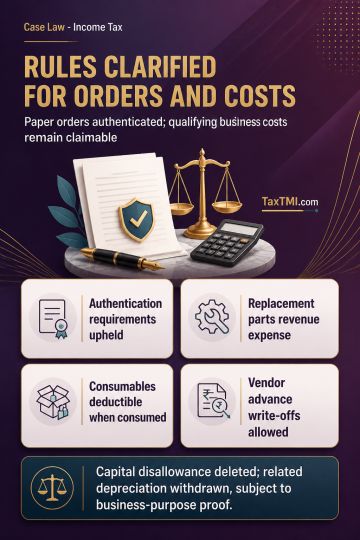
Authentication of paper assessment orders upheld, while qualifying repairs, consumables and vendor advance write-offs remain deductible business claim...
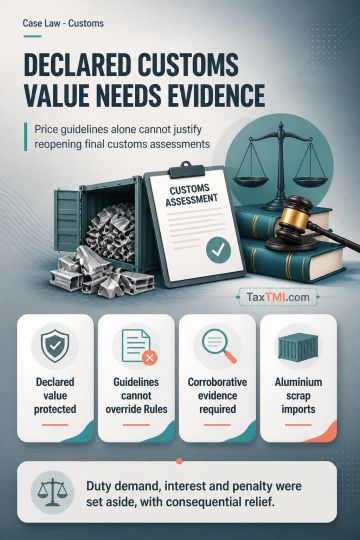
Transaction value cannot be rejected solely on non-statutory valuation guidelines without corroborative evidence supporting reassessment of final cust...
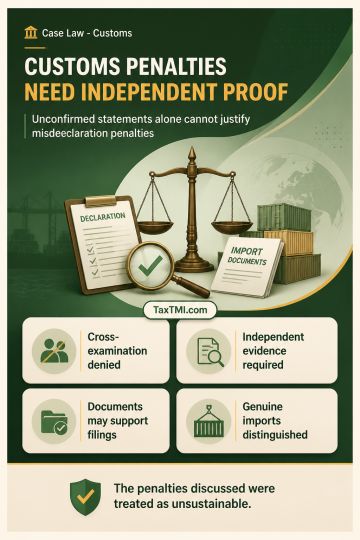
Cross-examination rights and corroborated evidence limit customs penalties for misdeclaration in genuine import transactions involving documented clea...
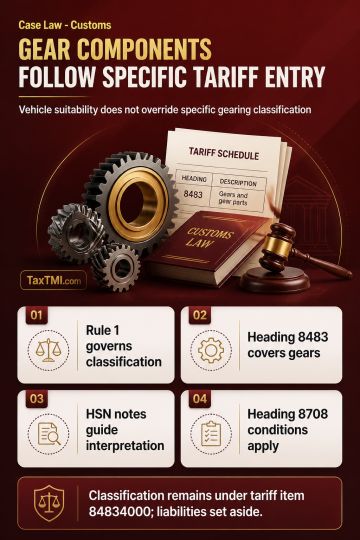
Tariff classification of vehicle gear components follows the specific gearing entry, displacing motor-vehicle parts classification and related liabili...
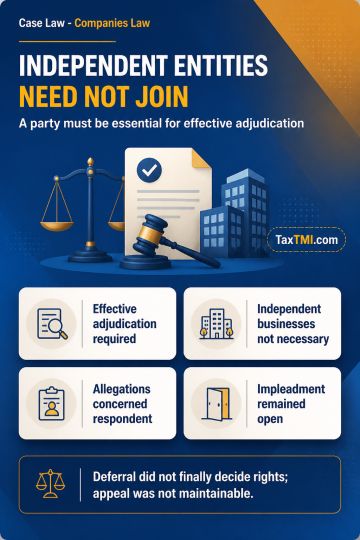
Necessary-party requirements limit impleadment of independent entities, while deferred consideration does not create an appealable adverse determinati...
The court held that the sum received under the co-marketing agreement was a capital receipt, not a revenue receipt. The intention of the parties gathered from the agreement's language is crucial. The Supreme Court's test distinguishes capital receipts that impair the trading structure or income source from revenue receipts that are normal business incidents. The agreement was a negative/restrictive covenant where the payment compensated for surrendering rights in capital assets like patents and trademarks. This impaired the profit-making apparatus, making it a capital receipt. The Tribunal's finding based on evidence appreciation cannot be termed perverse, and the High Court cannot interfere with factual findings unless demonstrated as perverse.
The court held that the sum received under the co-marketing agreement was a capital receipt, not a revenue receipt. The intention of the parties gathered from the agreement's language is crucial. The Supreme Court's test distinguishes capital receipts that impair the trading structure or income source from revenue receipts that are normal business incidents. The agreement was a negative/restrictive covenant where the payment compensated for surrendering rights in capital assets like patents and trademarks. This impaired the profit-making apparatus, making it a capital receipt. The Tribunal's finding based on evidence appreciation cannot be termed perverse, and the High Court cannot interfere with factual findings unless demonstrated as perverse.
Note: It is a system-generated summary and is for quick reference only.
 TaxTMI
 of 4803










 Join Channel


 TaxTMI
