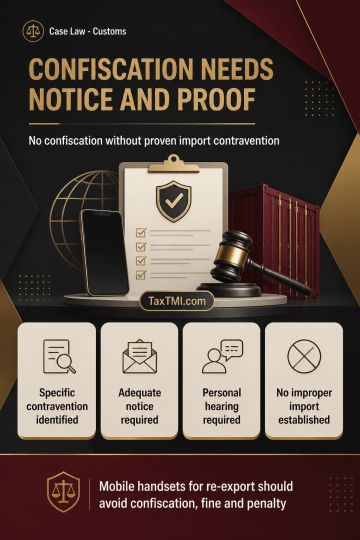
Arrest safeguards require disclosed grounds, relative intimation and transit remand, while duplicate prosecution under the CGST framework is unsustain...
Document Identification Number defects can invalidate GST assessments, with delayed challenges entertained conditionally where patent irregularities e...
Windmill commissioning evidence supported higher depreciation where grid connection and electricity generation proved operational use before the relev...
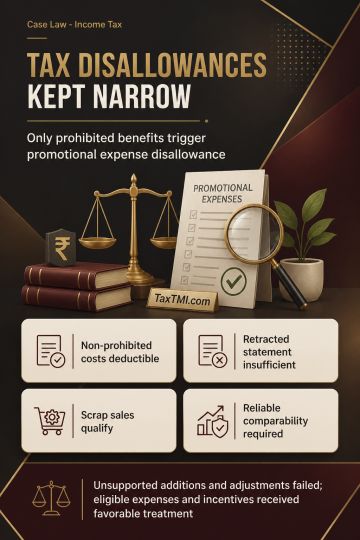
Pharmaceutical promotion and transfer-pricing comparability principles limited disallowances, while uncorroborated search allegations and unsupported ...
Business expenditure substantiation supports scrap credits, statutory payments and expense claims, while depreciation requires proof of actual busines...
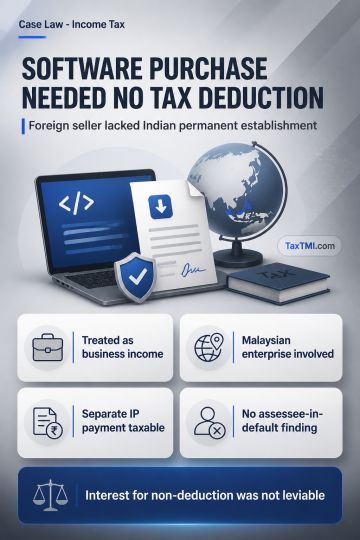
The assessee, a US-based company engaged in offshore sales of goods and software to customers in India, contended that it had no permanent establishment (PE) or dependent agent permanent establishment (DAPE) in India. The Assessing Officer (AO) treated the assessee's liaison office (LO) as a PE, leading to the attribution of income to India. However, the assessee provided relevant documents to substantiate the closure of the LO and the absence of expatriate employees in India during the relevant period. The Tribunal observed that the Revenue failed to rebut the assessee's contentions or provide contrary evidence regarding the closure of the LO operations. Consequently, the Tribunal held that the assessee had no PE or DAPE in India during the assessment year, precluding the attribution of profits to a PE. Regarding the treatment of receipts from software supply as royalty u/s 9(1)(vii), the Tribunal noted that the AO disregarded the Dispute Resolution Panel's directions to verify if the software was embedded in hardware. The Tribunal referred to its coordinate Bench's ruling in the assessee's own case for preceding years, which held that payments by resident end-users/distributors to non-resident computer manufacturers/suppliers for resale/use of computer software through EULAs/distribution agreements do not constitute royalty payments for the use of copyright in computer.
The assessee, a US-based company engaged in offshore sales of goods and software to customers in India, contended that it had no permanent establishment (PE) or dependent agent permanent establishment (DAPE) in India. The Assessing Officer (AO) treated the assessee's liaison office (LO) as a PE, leading to the attribution of income to India. However, the assessee provided relevant documents to substantiate the closure of the LO and the absence of expatriate employees in India during the relevant period. The Tribunal observed that the Revenue failed to rebut the assessee's contentions or provide contrary evidence regarding the closure of the LO operations. Consequently, the Tribunal held that the assessee had no PE or DAPE in India during the assessment year, precluding the attribution of profits to a PE. Regarding the treatment of receipts from software supply as royalty u/s 9(1)(vii), the Tribunal noted that the AO disregarded the Dispute Resolution Panel's directions to verify if the software was embedded in hardware. The Tribunal referred to its coordinate Bench's ruling in the assessee's own case for preceding years, which held that payments by resident end-users/distributors to non-resident computer manufacturers/suppliers for resale/use of computer software through EULAs/distribution agreements do not constitute royalty payments for the use of copyright in computer.
Note: It is a system-generated summary and is for quick reference only.
 TaxTMI
 of 4805














 Join Channel


 TaxTMI