Opportunity to respond to jurisdictional reports is mandatory before customs settlement duty enhancement; connected applications require consistent ad...
Specific customs headings for scaffolding components prevail over general classification, invalidating misclassification proceedings and enabling with...
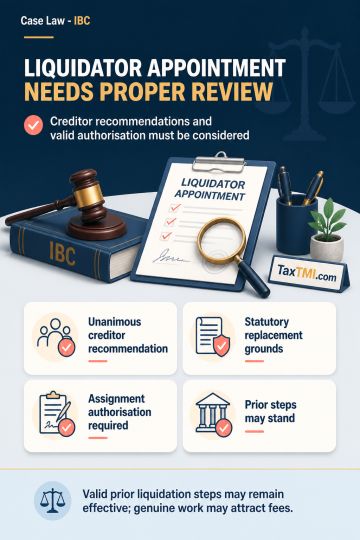
Liquidator appointment under Section 34 requires consideration of creditor recommendations, valid professional authorisation, and preservation of vali...
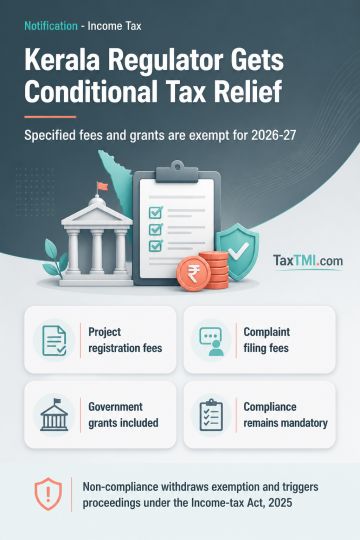
Income-tax exemption for specified regulatory fees and government grants applies subject to non-commercial activity and continuing compliance conditio...
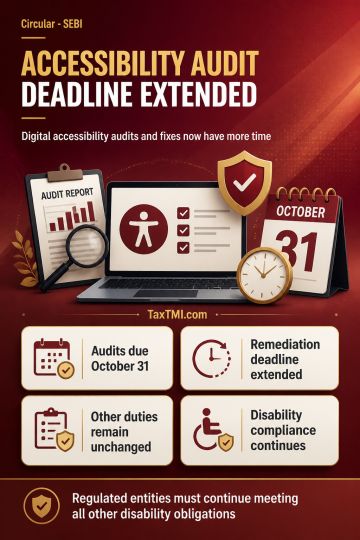
Digital accessibility audit and remediation deadlines extended, while all other disability-compliance obligations for regulated entities remain unchan...
Page of 4803
Press 'Enter' after typing page number.
621 to 640 of 96047 Results
❮
❯
❯❯
0 / 200
Expand Note
Add to Folder
No Folders have been created
+
Are you sure you want to delete "My most important" ?
The assessee, a US-based company engaged in offshore sales of goods and software to customers in India, contended that it had no permanent establishment (PE) or dependent agent permanent establishment (DAPE) in India. The Assessing Officer (AO) treated the assessee's liaison office (LO) as a PE, leading to the attribution of income to India. However, the assessee provided relevant documents to substantiate the closure of the LO and the absence of expatriate employees in India during the relevant period. The Tribunal observed that the Revenue failed to rebut the assessee's contentions or provide contrary evidence regarding the closure of the LO operations. Consequently, the Tribunal held that the assessee had no PE or DAPE in India during the assessment year, precluding the attribution of profits to a PE. Regarding the treatment of receipts from software supply as royalty u/s 9(1)(vii), the Tribunal noted that the AO disregarded the Dispute Resolution Panel's directions to verify if the software was embedded in hardware. The Tribunal referred to its coordinate Bench's ruling in the assessee's own case for preceding years, which held that payments by resident end-users/distributors to non-resident computer manufacturers/suppliers for resale/use of computer software through EULAs/distribution agreements do not constitute royalty payments for the use of copyright in computer.
The assessee, a US-based company engaged in offshore sales of goods and software to customers in India, contended that it had no permanent establishment (PE) or dependent agent permanent establishment (DAPE) in India. The Assessing Officer (AO) treated the assessee's liaison office (LO) as a PE, leading to the attribution of income to India. However, the assessee provided relevant documents to substantiate the closure of the LO and the absence of expatriate employees in India during the relevant period. The Tribunal observed that the Revenue failed to rebut the assessee's contentions or provide contrary evidence regarding the closure of the LO operations. Consequently, the Tribunal held that the assessee had no PE or DAPE in India during the assessment year, precluding the attribution of profits to a PE. Regarding the treatment of receipts from software supply as royalty u/s 9(1)(vii), the Tribunal noted that the AO disregarded the Dispute Resolution Panel's directions to verify if the software was embedded in hardware. The Tribunal referred to its coordinate Bench's ruling in the assessee's own case for preceding years, which held that payments by resident end-users/distributors to non-resident computer manufacturers/suppliers for resale/use of computer software through EULAs/distribution agreements do not constitute royalty payments for the use of copyright in computer.
Note: It is a system-generated summary and is for quick reference only.
 TaxTMI
 of 4803










 Join Channel


 TaxTMI