Cross-examination rights and corroborated evidence limit customs penalties for misdeclaration in genuine import transactions involving documented clea...
Tariff classification of vehicle gear components follows the specific gearing entry, displacing motor-vehicle parts classification and related liabili...
Necessary-party requirements limit impleadment of independent entities, while deferred consideration does not create an appealable adverse determinati...
Food supplement classification requires common parlance and authoritative tests, preventing treatment as proprietary Ayurvedic medicines without suppo...
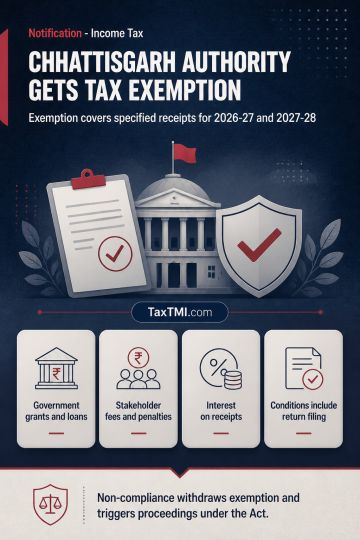
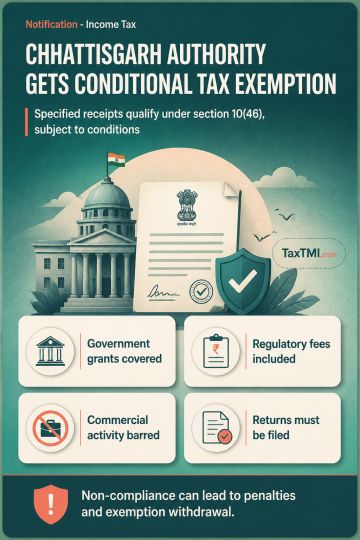
Specified regulatory authority income receives conditional tax exemption, subject to non-commercial activity, unchanged income character, and return f...
Tax exemption for regulatory authority income applies retrospectively, subject to non-commercial activity, unchanged income sources, and return-filing...
The case pertains to the jurisdiction of impugned orders under the U.P.G.S.T. Act, 2017, and the time limitation u/s 73 and Section 44 of the Act. The key points are: the retrospective effect of notifications, the time limit prescribed for issuing orders u/s 73(9) based on the due date of filing annual returns u/s 44(1), and the validity of the impugned orders in light of this time limit. The due date for filing the annual return for the financial year 2017-18 was extended to 05.02.2020 via notifications. Consequently, the three-year time limit u/s 73(10) for issuing orders ended on 05.02.2023. However, the impugned orders were dated 05.10.2024 and 02.12.2023, beyond the prescribed time limit. Therefore, the High Court held that the impugned orders were beyond jurisdiction, being barred by the time limit u/s 73(10). Consequently, the writ petition was allowed, the impugned orders were quashed, and the petitioner's frozen accounts were ordered to be de-frozen.
The case pertains to the jurisdiction of impugned orders under the U.P.G.S.T. Act, 2017, and the time limitation u/s 73 and Section 44 of the Act. The key points are: the retrospective effect of notifications, the time limit prescribed for issuing orders u/s 73(9) based on the due date of filing annual returns u/s 44(1), and the validity of the impugned orders in light of this time limit. The due date for filing the annual return for the financial year 2017-18 was extended to 05.02.2020 via notifications. Consequently, the three-year time limit u/s 73(10) for issuing orders ended on 05.02.2023. However, the impugned orders were dated 05.10.2024 and 02.12.2023, beyond the prescribed time limit. Therefore, the High Court held that the impugned orders were beyond jurisdiction, being barred by the time limit u/s 73(10). Consequently, the writ petition was allowed, the impugned orders were quashed, and the petitioner's frozen accounts were ordered to be de-frozen.
Note: It is a system-generated summary and is for quick reference only.
 TaxTMI
 of 4798


















 Join Channel


 TaxTMI