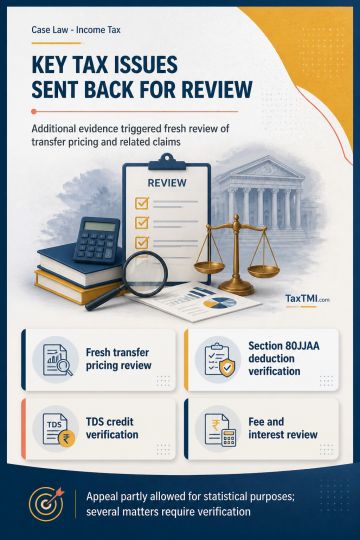
Additional evidence in transfer pricing dispute leads to fresh examination, while tax deductions, TDS credit, fee and refund interest require verifica...
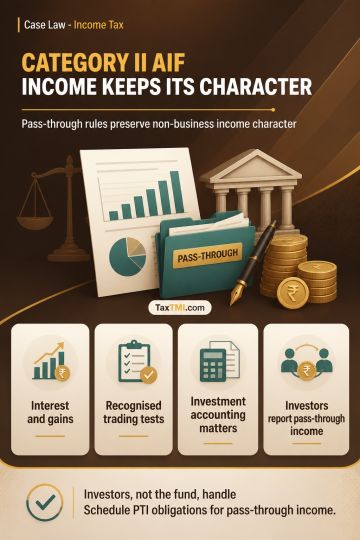
Category II AIF pass-through taxation preserves non-business income character; investment receipts cannot be reclassified without applying recognised ...
Mutual fund maturity rules require proper rollover, redemption, disclosure, and due diligence; investor gains cannot excuse regulatory breaches or pen...
Threshold exemption excludes exempt services, while stamp-paper purchases avoid reverse charge; consequential service tax penalties were also set asid...
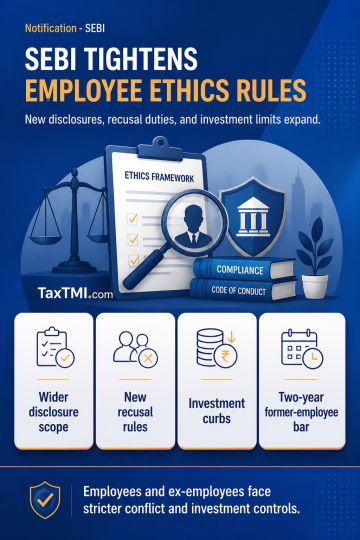
Employee conflict disclosures and investment restrictions expand with new recusal duties, post-employment limits, and compliance reporting requirement...
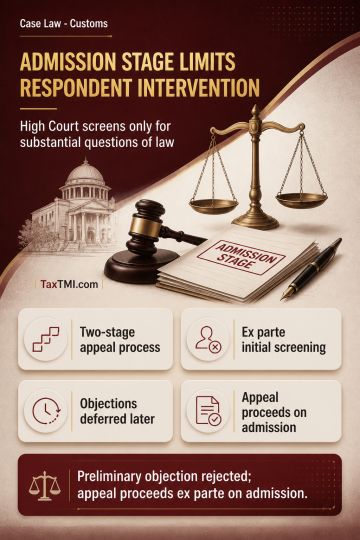
Seizure of goods as smuggled into the country from Myanmar u/s 130 of the Customs Act, 1962. The burden of proof lies on the respondent u/s 123 to show that the seized areca nuts are not smuggled goods, or on the Department u/s 111 to establish that the seized betel nuts are of foreign origin and smuggled before confiscation. The High Court emphasized that the existence of a substantial question of law is a prerequisite for exercising jurisdiction u/s 130. The Court examined whether the Appellate Tribunal ignored material evidence or acted without evidence, which could constitute a substantial question of law. The Court analyzed the evidence, including the proximity to the international border, lack of foreign markings, absence of expert opinion on origin, and documents showing purchase from a local store. The Court concluded that the Tribunal's order cannot be treated as perverse, as it was not arrived at without evidence or reasons, thus answering the substantial question of law framed regarding perversity against the appellant.
Seizure of goods as smuggled into the country from Myanmar u/s 130 of the Customs Act, 1962. The burden of proof lies on the respondent u/s 123 to show that the seized areca nuts are not smuggled goods, or on the Department u/s 111 to establish that the seized betel nuts are of foreign origin and smuggled before confiscation. The High Court emphasized that the existence of a substantial question of law is a prerequisite for exercising jurisdiction u/s 130. The Court examined whether the Appellate Tribunal ignored material evidence or acted without evidence, which could constitute a substantial question of law. The Court analyzed the evidence, including the proximity to the international border, lack of foreign markings, absence of expert opinion on origin, and documents showing purchase from a local store. The Court concluded that the Tribunal's order cannot be treated as perverse, as it was not arrived at without evidence or reasons, thus answering the substantial question of law framed regarding perversity against the appellant.
Note: It is a system-generated summary and is for quick reference only.
 TaxTMI
 of 4803














 Join Channel


 TaxTMI
