Retention of seized property survives where recorded reasons support proceeds of crime, while stayed investigation periods are excluded from limitatio...
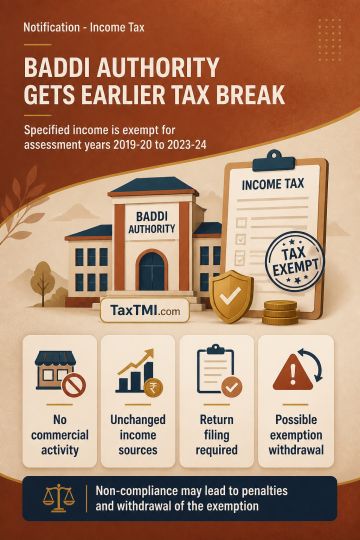
Specified income of Baddi Barotiwala Nalagarh Development Authority receives conditional tax exemption, retrospectively covering its designated assess...
Specified development authority income receives retrospective tax exemption, subject to non-commercial activity, unchanged income sources, and return-...
Unified Brand India framework introduces voluntary Trust Mark certification and funding support for export branding, packaging and global promotional ...
Origin Declaration authentication governs preferential tariff claims under India-UK CETA, requiring a validated reference number before import clearan...
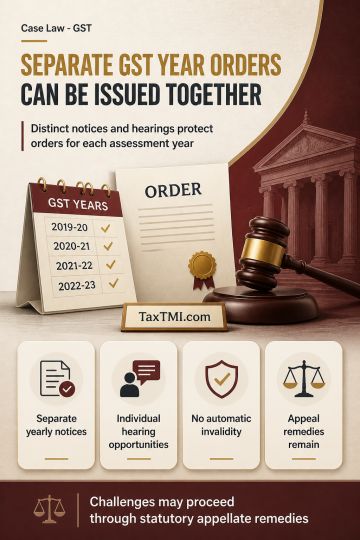
Separate assessment orders for different years remain valid when distinct notices and hearing opportunities prevent prejudice from combined proceeding...
Seizure of goods as smuggled into the country from Myanmar u/s 130 of the Customs Act, 1962. The burden of proof lies on the respondent u/s 123 to show that the seized areca nuts are not smuggled goods, or on the Department u/s 111 to establish that the seized betel nuts are of foreign origin and smuggled before confiscation. The High Court emphasized that the existence of a substantial question of law is a prerequisite for exercising jurisdiction u/s 130. The Court examined whether the Appellate Tribunal ignored material evidence or acted without evidence, which could constitute a substantial question of law. The Court analyzed the evidence, including the proximity to the international border, lack of foreign markings, absence of expert opinion on origin, and documents showing purchase from a local store. The Court concluded that the Tribunal's order cannot be treated as perverse, as it was not arrived at without evidence or reasons, thus answering the substantial question of law framed regarding perversity against the appellant.
Seizure of goods as smuggled into the country from Myanmar u/s 130 of the Customs Act, 1962. The burden of proof lies on the respondent u/s 123 to show that the seized areca nuts are not smuggled goods, or on the Department u/s 111 to establish that the seized betel nuts are of foreign origin and smuggled before confiscation. The High Court emphasized that the existence of a substantial question of law is a prerequisite for exercising jurisdiction u/s 130. The Court examined whether the Appellate Tribunal ignored material evidence or acted without evidence, which could constitute a substantial question of law. The Court analyzed the evidence, including the proximity to the international border, lack of foreign markings, absence of expert opinion on origin, and documents showing purchase from a local store. The Court concluded that the Tribunal's order cannot be treated as perverse, as it was not arrived at without evidence or reasons, thus answering the substantial question of law framed regarding perversity against the appellant.
Note: It is a system-generated summary and is for quick reference only.
 TaxTMI
 of 4801

















 Join Channel


 TaxTMI