Cooperative society deposits, member-interest TDS exemption and credit-facility deduction claims require verification through records and supporting e...
Customs jurisdiction over EPCG condition breaches survives export-obligation discharge certificates, requiring alleged fraud and misdeclaration to be ...
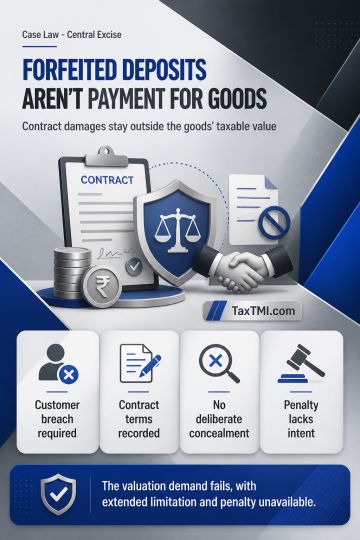
Contractual tolerance requires consideration; breach recoveries, qualifying public infrastructure services and road works escape service tax liability...
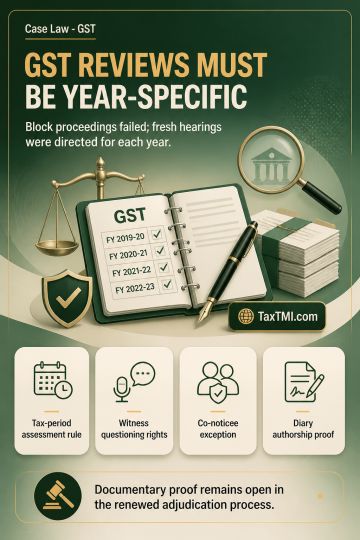
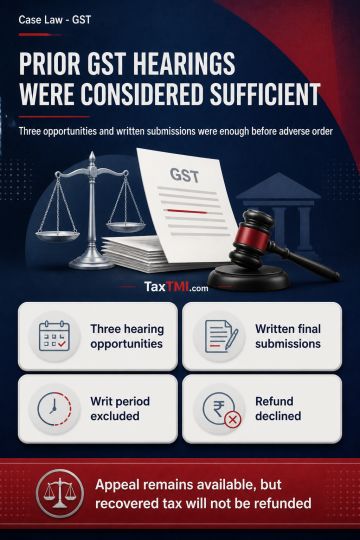
Personal hearing requirements in GST adjudication were satisfied by prior opportunities and written submissions; appellate limitation received writ-pe...
Seizure of goods as smuggled into the country from Myanmar u/s 130 of the Customs Act, 1962. The burden of proof lies on the respondent u/s 123 to show that the seized areca nuts are not smuggled goods, or on the Department u/s 111 to establish that the seized betel nuts are of foreign origin and smuggled before confiscation. The High Court emphasized that the existence of a substantial question of law is a prerequisite for exercising jurisdiction u/s 130. The Court examined whether the Appellate Tribunal ignored material evidence or acted without evidence, which could constitute a substantial question of law. The Court analyzed the evidence, including the proximity to the international border, lack of foreign markings, absence of expert opinion on origin, and documents showing purchase from a local store. The Court concluded that the Tribunal's order cannot be treated as perverse, as it was not arrived at without evidence or reasons, thus answering the substantial question of law framed regarding perversity against the appellant.
Seizure of goods as smuggled into the country from Myanmar u/s 130 of the Customs Act, 1962. The burden of proof lies on the respondent u/s 123 to show that the seized areca nuts are not smuggled goods, or on the Department u/s 111 to establish that the seized betel nuts are of foreign origin and smuggled before confiscation. The High Court emphasized that the existence of a substantial question of law is a prerequisite for exercising jurisdiction u/s 130. The Court examined whether the Appellate Tribunal ignored material evidence or acted without evidence, which could constitute a substantial question of law. The Court analyzed the evidence, including the proximity to the international border, lack of foreign markings, absence of expert opinion on origin, and documents showing purchase from a local store. The Court concluded that the Tribunal's order cannot be treated as perverse, as it was not arrived at without evidence or reasons, thus answering the substantial question of law framed regarding perversity against the appellant.
Note: It is a system-generated summary and is for quick reference only.
 TaxTMI
 of 4792















 Join Channel


 TaxTMI