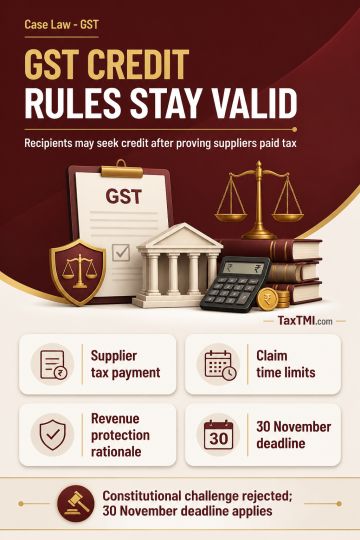
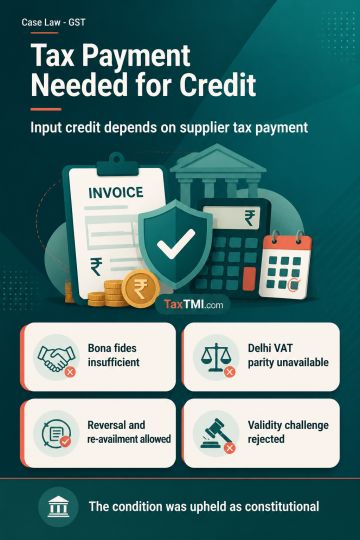
Input tax credit conditions remain constitutionally valid, with eligible recipient claims considered under GST circulars and retrospective filing dead...
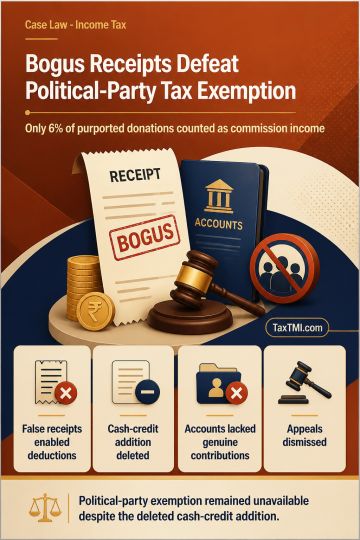
Bogus donation receipts justified commission income assessment and defeated political-party tax exemption for inaccurate accounts and reporting failur...
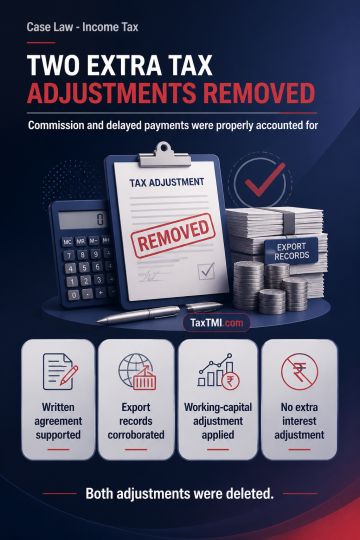
Pure reimbursement without income element escapes tax withholding, while delayed withholding and unsupported provisions face deferred or renewed scrut...
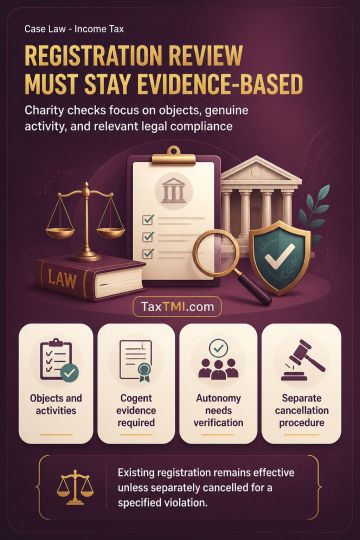
Public benefit requirement defeats charitable registration where residents' association services are reciprocal, member-only facilities governed by mu...
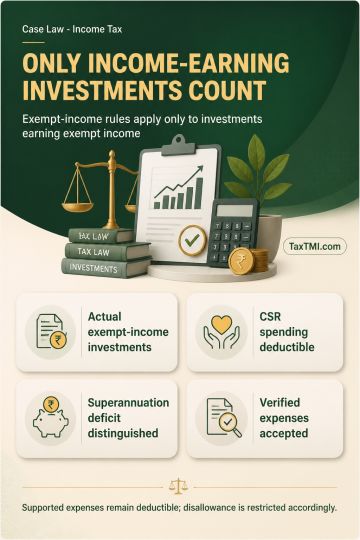
Exempt-income expenditure disallowance is confined to investments that actually generated exempt income, while supported business expenses remain dedu...
The case pertains to the imposition of a fine and penalty for the rejection of the declared value and redetermination of the value u/r 12 of the Customs Valuation (Determination of Price of Imported Goods) Rules, 2007. The goods were confiscated u/s 125 of the Customs Act, 1962, with an option to redeem them on payment of a fine of Rs. 3,25,000/- and a penalty of Rs. 1,50,000/- u/s 112(a) for rendering the goods liable for confiscation u/s 111. The Appellate Tribunal found that the issue involved a non-deliberate contravention of the law due to business exigencies, with no loss of revenue or deliberate intention to evade duty payment. While acknowledging that any breach of civil obligation under the Act is blameworthy, the Tribunal drew a distinction between a bona fide mistake and dishonest non-compliance when imposing a fine and penalty. Considering that the goods were not prohibited for import and the assessable value was determined at Rs. 6,54,349/-, the Tribunal found the initially imposed fine and penalty excessive and moderated them to a fine of Rs. 6,500/- and a penalty of Rs. 1,000/-.
The case pertains to the imposition of a fine and penalty for the rejection of the declared value and redetermination of the value u/r 12 of the Customs Valuation (Determination of Price of Imported Goods) Rules, 2007. The goods were confiscated u/s 125 of the Customs Act, 1962, with an option to redeem them on payment of a fine of Rs. 3,25,000/- and a penalty of Rs. 1,50,000/- u/s 112(a) for rendering the goods liable for confiscation u/s 111. The Appellate Tribunal found that the issue involved a non-deliberate contravention of the law due to business exigencies, with no loss of revenue or deliberate intention to evade duty payment. While acknowledging that any breach of civil obligation under the Act is blameworthy, the Tribunal drew a distinction between a bona fide mistake and dishonest non-compliance when imposing a fine and penalty. Considering that the goods were not prohibited for import and the assessable value was determined at Rs. 6,54,349/-, the Tribunal found the initially imposed fine and penalty excessive and moderated them to a fine of Rs. 6,500/- and a penalty of Rs. 1,000/-.
Note: It is a system-generated summary and is for quick reference only.
 TaxTMI
 of 4786









 Join Channel


 TaxTMI