Input tax credit conditions remain constitutionally valid, with eligible recipient claims considered under GST circulars and retrospective filing dead...
Bogus donation receipts justified commission income assessment and defeated political-party tax exemption for inaccurate accounts and reporting failur...
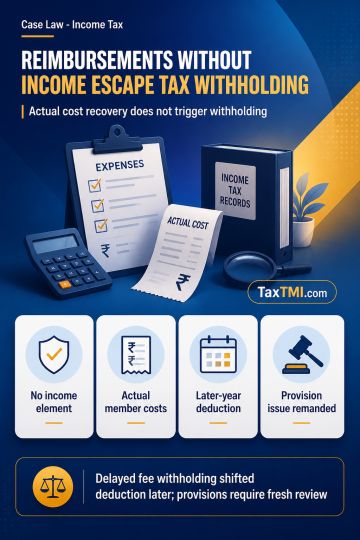
Pure reimbursement without income element escapes tax withholding, while delayed withholding and unsupported provisions face deferred or renewed scrut...
Public benefit requirement defeats charitable registration where residents' association services are reciprocal, member-only facilities governed by mu...
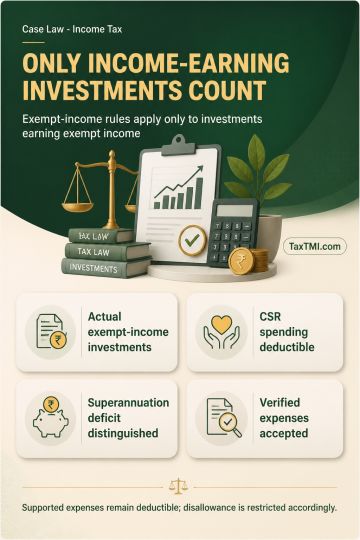
Exempt-income expenditure disallowance is confined to investments that actually generated exempt income, while supported business expenses remain dedu...
This circular clarifies the classification of clear float glass under the Customs Tariff Act, 1975. It addresses whether the presence of a tin layer on one side of float glass should be treated as an absorbent, reflective layer, impacting its classification. The circular refers to Chapter Note 2(c) of Chapter 70, defining "absorbent, reflecting or non-reflecting layer" as a microscopically thin coating of metal or chemical compound that absorbs infrared light, improves reflecting qualities, or prevents light reflection while retaining transparency/translucency. After consulting CSIR-Central Glass & Ceramic Research Institute, it concludes that the tin layer on float glass is inherent to the manufacturing process and does not satisfy the definition under Note 2(c). Consequently, clear float glass without wiring, coloring, reflective or tinted properties, and only a tin layer on one side without any other metal oxide layer, will be classified under tariff item 7005 29 90 as it lacks an absorbent layer.
This circular clarifies the classification of clear float glass under the Customs Tariff Act, 1975. It addresses whether the presence of a tin layer on one side of float glass should be treated as an absorbent, reflective layer, impacting its classification. The circular refers to Chapter Note 2(c) of Chapter 70, defining "absorbent, reflecting or non-reflecting layer" as a microscopically thin coating of metal or chemical compound that absorbs infrared light, improves reflecting qualities, or prevents light reflection while retaining transparency/translucency. After consulting CSIR-Central Glass & Ceramic Research Institute, it concludes that the tin layer on float glass is inherent to the manufacturing process and does not satisfy the definition under Note 2(c). Consequently, clear float glass without wiring, coloring, reflective or tinted properties, and only a tin layer on one side without any other metal oxide layer, will be classified under tariff item 7005 29 90 as it lacks an absorbent layer.
Note: It is a system-generated summary and is for quick reference only.
 TaxTMI
 of 4782


















 Join Channel


 TaxTMI