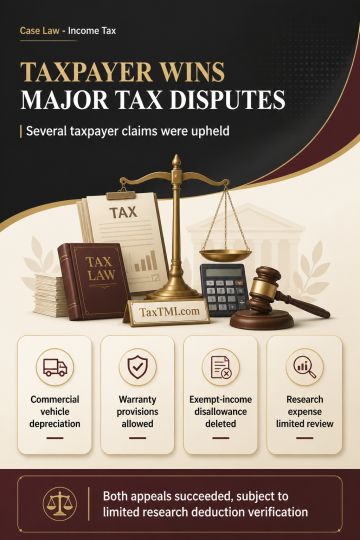
Commercial vehicle depreciation, scientifically determined warranty provisions and exempt-income disallowances were resolved in favour of the taxpayer...
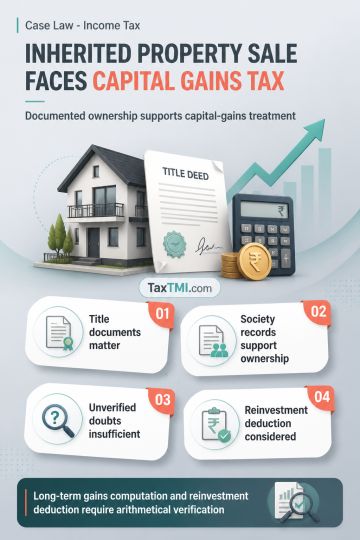
Inherited property sale proceeds require capital-gains treatment where ownership is supported by evidence, not suspicion or unverified signature doubt...
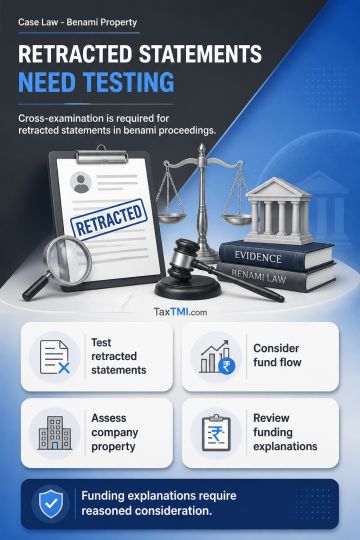
Cross-examination of retracted statements is essential where foundational evidence supports a benami allegation and documented funding explanations re...
Capital-goods exemption covers plant-modernisation accessories, while the import restriction applies only to earlier capital-goods components and spar...
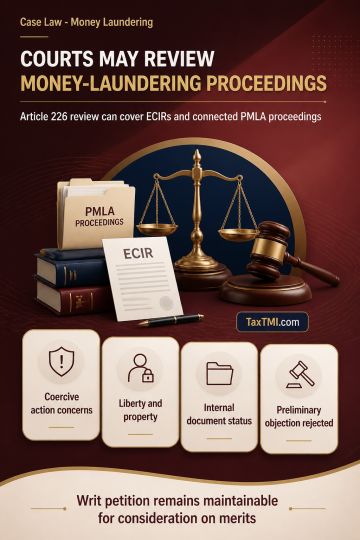
Constitutional judicial review permits challenges to ECIRs and connected money-laundering proceedings where coercive action affects fundamental intere...
The assessee, a foreign airline company and tax resident of the USA, engaged in the business of operating aircraft in international traffic, obtained approval from DGCA to undertake scheduled air services in India under the India-US Air Transport Agreement (ATA). It established a branch office in India for booking air passenger tickets and air freight, constituting a Permanent Establishment (PE) in India. The issue pertained to the taxability of income in India from code-sharing arrangements with third parties, where the assessee only booked tickets while the actual transportation was done by third parties. The coordinate bench had previously denied the benefit of exemption under Article 8 of the India-USA Tax Treaty for such receipts. However, the ITAT held that the profits derived from transporting passengers under code-sharing arrangements should be treated as profits from the operation of aircraft, exempt under Article 8, for the following reasons: (i) code-sharing falls within the ambit of "charterer" and "operation of aircraft" as defined in Article 8(2); (ii) passengers are transported on behalf of the assessee by third-party airlines on a principal-to-principal basis; and (iii) the transportation is inextricably linked. Accordingly, the receipts under code-sharing arrangements are covered under Article 8 and cannot be taxed in India.
The assessee, a foreign airline company and tax resident of the USA, engaged in the business of operating aircraft in international traffic, obtained approval from DGCA to undertake scheduled air services in India under the India-US Air Transport Agreement (ATA). It established a branch office in India for booking air passenger tickets and air freight, constituting a Permanent Establishment (PE) in India. The issue pertained to the taxability of income in India from code-sharing arrangements with third parties, where the assessee only booked tickets while the actual transportation was done by third parties. The coordinate bench had previously denied the benefit of exemption under Article 8 of the India-USA Tax Treaty for such receipts. However, the ITAT held that the profits derived from transporting passengers under code-sharing arrangements should be treated as profits from the operation of aircraft, exempt under Article 8, for the following reasons: (i) code-sharing falls within the ambit of "charterer" and "operation of aircraft" as defined in Article 8(2); (ii) passengers are transported on behalf of the assessee by third-party airlines on a principal-to-principal basis; and (iii) the transportation is inextricably linked. Accordingly, the receipts under code-sharing arrangements are covered under Article 8 and cannot be taxed in India.
Note: It is a system-generated summary and is for quick reference only.
 TaxTMI
 of 4782







 Join Channel


 TaxTMI
