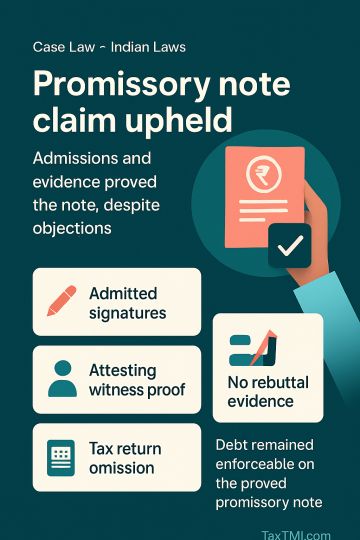
Promissory note presumption of consideration survives blank-signature and income-tax non-disclosure objections when admissions and attesting evidence ...
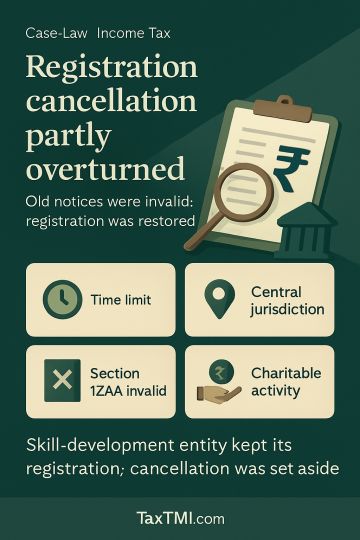
Charitable registration cancellation: limitation and jurisdiction upheld, but withdrawal quashed under discontinued provisions for skill-development e...
Page of 4803
Press 'Enter' after typing page number.
1421 to 1440 of 96047 Results
❮
❯
❯❯
0 / 200
Expand Note
Add to Folder
No Folders have been created
+
Are you sure you want to delete "My most important" ?
Refund claim was rejected as time-barred, having been filed beyond the one-year limitation period stipulated u/s 27 of the Customs Act, 1962. The appellant had inadvertently paid customs duty twice due to an ICEGATE error, resulting in double payment. The refund sanctioning authority held the refund claim as time-barred since it was not filed within one year from the date of duty payment. The key issue was whether the excess amount paid constituted a duty or a deposit, determining the applicability of Section 27's limitation period. The CESTAT upheld the rejection, ruling that barring unconstitutional levies, all refund claims must comply with statutory provisions, including limitation periods. The excess payment, though inadvertent, was in the nature of duty, not a deposit or illegal levy, and thus subject to Section 27's limitation. Tribunals, being statutory creatures, must function within the legislative framework.
Refund claim was rejected as time-barred, having been filed beyond the one-year limitation period stipulated u/s 27 of the Customs Act, 1962. The appellant had inadvertently paid customs duty twice due to an ICEGATE error, resulting in double payment. The refund sanctioning authority held the refund claim as time-barred since it was not filed within one year from the date of duty payment. The key issue was whether the excess amount paid constituted a duty or a deposit, determining the applicability of Section 27's limitation period. The CESTAT upheld the rejection, ruling that barring unconstitutional levies, all refund claims must comply with statutory provisions, including limitation periods. The excess payment, though inadvertent, was in the nature of duty, not a deposit or illegal levy, and thus subject to Section 27's limitation. Tribunals, being statutory creatures, must function within the legislative framework.
Note: It is a system-generated summary and is for quick reference only.
 TaxTMI
 of 4803






 Join Channel


 TaxTMI