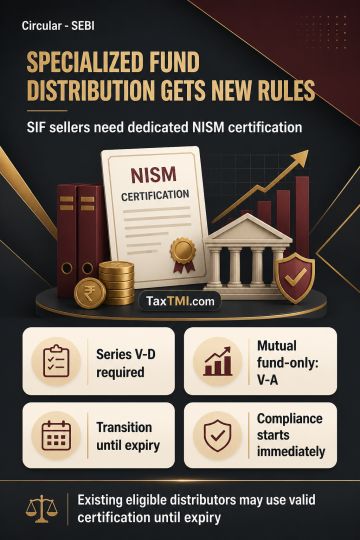
Specialized Investment Fund distribution now requires dedicated certification, while transitional recognition preserves existing qualified distributor...
Overlapping GST proceedings require Central and State authorities to designate one competent authority for coordinated adjudication of the same matter...
Composite healthcare supplies retain exemption when patient care is the contract's essential character, despite payment through an implementing agency...
Refund claim was rejected as time-barred, having been filed beyond the one-year limitation period stipulated u/s 27 of the Customs Act, 1962. The appellant had inadvertently paid customs duty twice due to an ICEGATE error, resulting in double payment. The refund sanctioning authority held the refund claim as time-barred since it was not filed within one year from the date of duty payment. The key issue was whether the excess amount paid constituted a duty or a deposit, determining the applicability of Section 27's limitation period. The CESTAT upheld the rejection, ruling that barring unconstitutional levies, all refund claims must comply with statutory provisions, including limitation periods. The excess payment, though inadvertent, was in the nature of duty, not a deposit or illegal levy, and thus subject to Section 27's limitation. Tribunals, being statutory creatures, must function within the legislative framework.
Refund claim was rejected as time-barred, having been filed beyond the one-year limitation period stipulated u/s 27 of the Customs Act, 1962. The appellant had inadvertently paid customs duty twice due to an ICEGATE error, resulting in double payment. The refund sanctioning authority held the refund claim as time-barred since it was not filed within one year from the date of duty payment. The key issue was whether the excess amount paid constituted a duty or a deposit, determining the applicability of Section 27's limitation period. The CESTAT upheld the rejection, ruling that barring unconstitutional levies, all refund claims must comply with statutory provisions, including limitation periods. The excess payment, though inadvertent, was in the nature of duty, not a deposit or illegal levy, and thus subject to Section 27's limitation. Tribunals, being statutory creatures, must function within the legislative framework.
Note: It is a system-generated summary and is for quick reference only.
 TaxTMI
 of 4798








 Join Channel


 TaxTMI
