Commercial vehicle depreciation, scientifically determined warranty provisions and exempt-income disallowances were resolved in favour of the taxpayer...
Inherited property sale proceeds require capital-gains treatment where ownership is supported by evidence, not suspicion or unverified signature doubt...
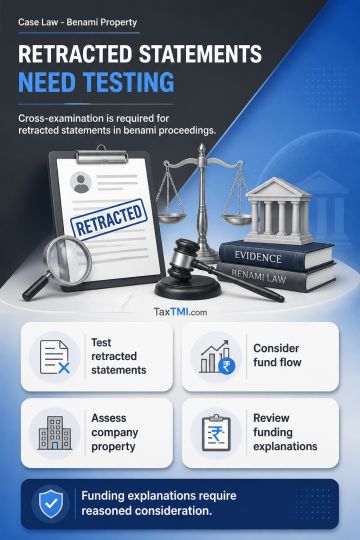
Cross-examination of retracted statements is essential where foundational evidence supports a benami allegation and documented funding explanations re...
Capital-goods exemption covers plant-modernisation accessories, while the import restriction applies only to earlier capital-goods components and spar...
Constitutional judicial review permits challenges to ECIRs and connected money-laundering proceedings where coercive action affects fundamental intere...
The Supreme Court held that an application for anticipatory bail u/s 438 of the CrPC is maintainable even when the accused is in judicial custody in connection with a different case. The purpose of Section 438 is to safeguard personal liberty and the presumption of innocence. While there is no fundamental right to anticipatory bail, the court should not deprive the accused of exercising this statutory right until their release from custody in the first offense. Doing so may enable investigating agencies to arrest the accused immediately upon release, denying them the opportunity to seek anticipatory bail. The court clarified the procedure for arrest in such cases and emphasized that no restriction can be read into Section 438 to preclude an accused from applying for anticipatory bail while in custody for a different offense, as it would go against the provision's intent. The only restriction is under sub-section (4) of Section 438 or other statutes.
The Supreme Court held that an application for anticipatory bail u/s 438 of the CrPC is maintainable even when the accused is in judicial custody in connection with a different case. The purpose of Section 438 is to safeguard personal liberty and the presumption of innocence. While there is no fundamental right to anticipatory bail, the court should not deprive the accused of exercising this statutory right until their release from custody in the first offense. Doing so may enable investigating agencies to arrest the accused immediately upon release, denying them the opportunity to seek anticipatory bail. The court clarified the procedure for arrest in such cases and emphasized that no restriction can be read into Section 438 to preclude an accused from applying for anticipatory bail while in custody for a different offense, as it would go against the provision's intent. The only restriction is under sub-section (4) of Section 438 or other statutes.
Note: It is a system-generated summary and is for quick reference only.
 TaxTMI
 of 4782






















 Join Channel


 TaxTMI
