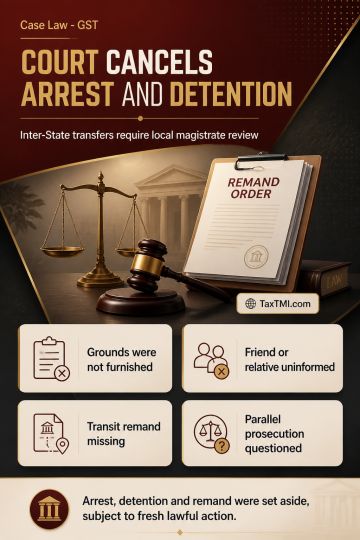
Arrest safeguards and transit remand requirements invalidated detention following inter-State transfer without communicated grounds or magistrate auth...
Arrest safeguards require disclosed grounds, relative intimation and transit remand, while duplicate prosecution under the CGST framework is unsustain...
Document Identification Number defects can invalidate GST assessments, with delayed challenges entertained conditionally where patent irregularities e...
Windmill commissioning evidence supported higher depreciation where grid connection and electricity generation proved operational use before the relev...
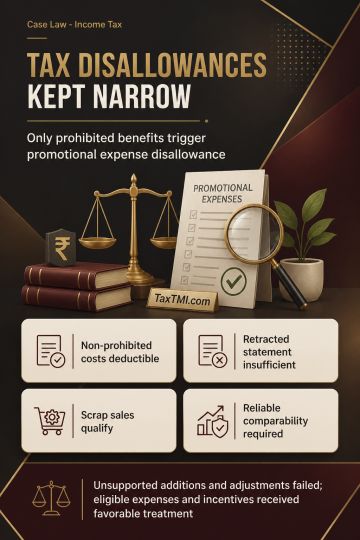
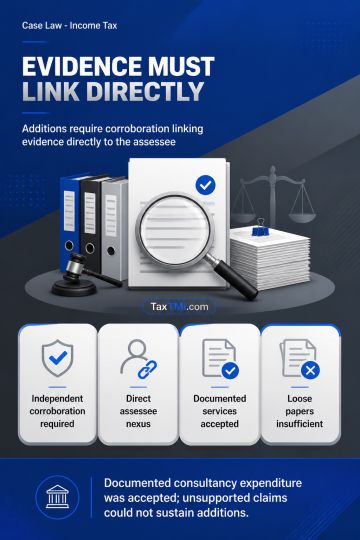
Pharmaceutical promotion and transfer-pricing comparability principles limited disallowances, while uncorroborated search allegations and unsupported ...
Business expenditure substantiation supports scrap credits, statutory payments and expense claims, while depreciation requires proof of actual busines...
The Supreme Court held that an application for anticipatory bail u/s 438 of the CrPC is maintainable even when the accused is in judicial custody in connection with a different case. The purpose of Section 438 is to safeguard personal liberty and the presumption of innocence. While there is no fundamental right to anticipatory bail, the court should not deprive the accused of exercising this statutory right until their release from custody in the first offense. Doing so may enable investigating agencies to arrest the accused immediately upon release, denying them the opportunity to seek anticipatory bail. The court clarified the procedure for arrest in such cases and emphasized that no restriction can be read into Section 438 to preclude an accused from applying for anticipatory bail while in custody for a different offense, as it would go against the provision's intent. The only restriction is under sub-section (4) of Section 438 or other statutes.
The Supreme Court held that an application for anticipatory bail u/s 438 of the CrPC is maintainable even when the accused is in judicial custody in connection with a different case. The purpose of Section 438 is to safeguard personal liberty and the presumption of innocence. While there is no fundamental right to anticipatory bail, the court should not deprive the accused of exercising this statutory right until their release from custody in the first offense. Doing so may enable investigating agencies to arrest the accused immediately upon release, denying them the opportunity to seek anticipatory bail. The court clarified the procedure for arrest in such cases and emphasized that no restriction can be read into Section 438 to preclude an accused from applying for anticipatory bail while in custody for a different offense, as it would go against the provision's intent. The only restriction is under sub-section (4) of Section 438 or other statutes.
Note: It is a system-generated summary and is for quick reference only.
 TaxTMI
 of 4784



















 Join Channel


 TaxTMI