Tax exemption for regulatory authority income applies retrospectively, subject to non-commercial activity, unchanged income sources, and return filing...
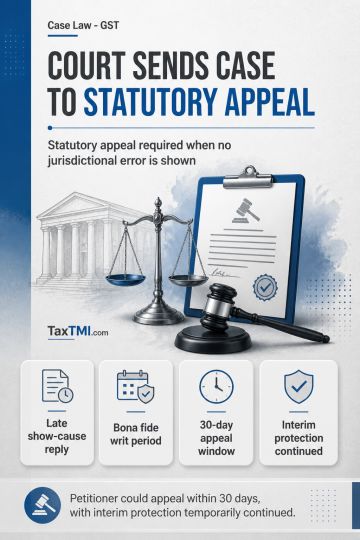
Dispute Resolution Panel objections must reach both prescribed forums; otherwise assessment may proceed and statutory appeal remains the proper remedy...
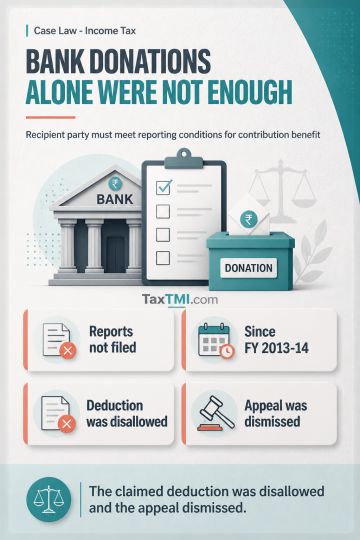
Political contribution deductions require recipient party compliance with contribution-reporting conditions; banking-channel donations alone do not qu...
Aggregation under TNMM prevents selective testing of intra-group services without comparable uncontrolled transactions, while appellate additional cla...
Protective assessment cannot duplicate identical receipts under competing characterisations; remote services did not establish a taxable permanent est...
Page of 4784
Press 'Enter' after typing page number.
301 to 320 of 95673 Results
❮
❯
❯❯
0 / 200
Expand Note
Add to Folder
No Folders have been created
+
Are you sure you want to delete "My most important" ?
The Supreme Court held that an application for anticipatory bail u/s 438 of the CrPC is maintainable even when the accused is in judicial custody in connection with a different case. The purpose of Section 438 is to safeguard personal liberty and the presumption of innocence. While there is no fundamental right to anticipatory bail, the court should not deprive the accused of exercising this statutory right until their release from custody in the first offense. Doing so may enable investigating agencies to arrest the accused immediately upon release, denying them the opportunity to seek anticipatory bail. The court clarified the procedure for arrest in such cases and emphasized that no restriction can be read into Section 438 to preclude an accused from applying for anticipatory bail while in custody for a different offense, as it would go against the provision's intent. The only restriction is under sub-section (4) of Section 438 or other statutes.
The Supreme Court held that an application for anticipatory bail u/s 438 of the CrPC is maintainable even when the accused is in judicial custody in connection with a different case. The purpose of Section 438 is to safeguard personal liberty and the presumption of innocence. While there is no fundamental right to anticipatory bail, the court should not deprive the accused of exercising this statutory right until their release from custody in the first offense. Doing so may enable investigating agencies to arrest the accused immediately upon release, denying them the opportunity to seek anticipatory bail. The court clarified the procedure for arrest in such cases and emphasized that no restriction can be read into Section 438 to preclude an accused from applying for anticipatory bail while in custody for a different offense, as it would go against the provision's intent. The only restriction is under sub-section (4) of Section 438 or other statutes.
Note: It is a system-generated summary and is for quick reference only.
 TaxTMI
 of 4784




















 Join Channel


 TaxTMI