Specified regulatory authority income receives conditional tax exemption, subject to non-commercial activity, unchanged income character, and return f...
Tax exemption for regulatory authority income applies retrospectively, subject to non-commercial activity, unchanged income sources, and return-filing...
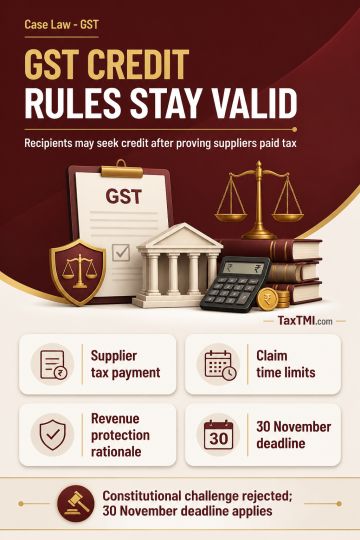
Input tax credit conditions remain constitutionally valid, with eligible recipient claims considered under GST circulars and retrospective filing dead...
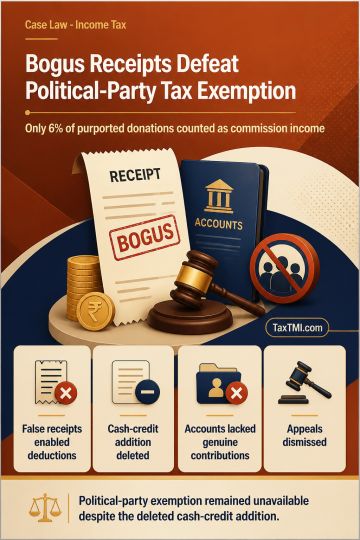
Bogus donation receipts justified commission income assessment and defeated political-party tax exemption for inaccurate accounts and reporting failur...
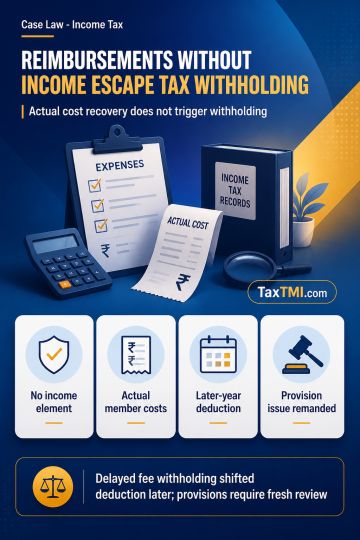
Pure reimbursement without income element escapes tax withholding, while delayed withholding and unsupported provisions face deferred or renewed scrut...
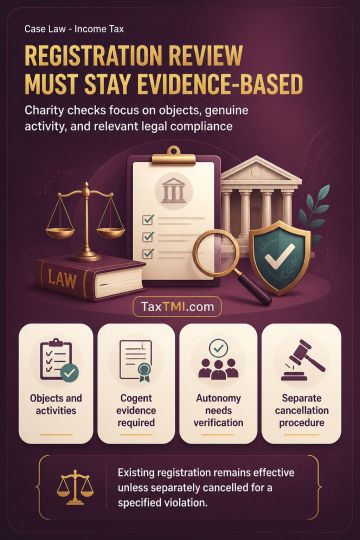
Public benefit requirement defeats charitable registration where residents' association services are reciprocal, member-only facilities governed by mu...
The appellant imported goods known as Tetramethyldodehdronaphto Furan (TF), classified as Aroma Chemicals. The show cause notice sought change in classification on grounds of its use as raw material for manufacturing synthetic perfumery compounds, fragrances, and flavour formulas. The Tribunal held that classification must be determined based on description in tariff headings, chapter and section notes, and rules of interpretation. The imported product, being a mixture of two isomers, is classifiable under Chapter 29 as per Chapter Note 1(b). The order relied on Chapter Note 1(e) to assert that when a product is dissolved in solvents making it suitable only for specific use, it can be taken out of Chapter 29. However, no evidence was produced regarding presence of solvents or suitability for single use. Consequently, the impugned order was set aside, and the appeal was allowed.
The appellant imported goods known as Tetramethyldodehdronaphto Furan (TF), classified as Aroma Chemicals. The show cause notice sought change in classification on grounds of its use as raw material for manufacturing synthetic perfumery compounds, fragrances, and flavour formulas. The Tribunal held that classification must be determined based on description in tariff headings, chapter and section notes, and rules of interpretation. The imported product, being a mixture of two isomers, is classifiable under Chapter 29 as per Chapter Note 1(b). The order relied on Chapter Note 1(e) to assert that when a product is dissolved in solvents making it suitable only for specific use, it can be taken out of Chapter 29. However, no evidence was produced regarding presence of solvents or suitability for single use. Consequently, the impugned order was set aside, and the appeal was allowed.
Note: It is a system-generated summary and is for quick reference only.
 TaxTMI
 of 4800










 Join Channel


 TaxTMI