Development agreements require legal possession or effective enjoyment for capital gains transfer; permissive possession and deferred consideration de...
Prolonged sterilisation of development rights supports capital-gains treatment, while business-income disallowances cannot govern capital-gains comput...
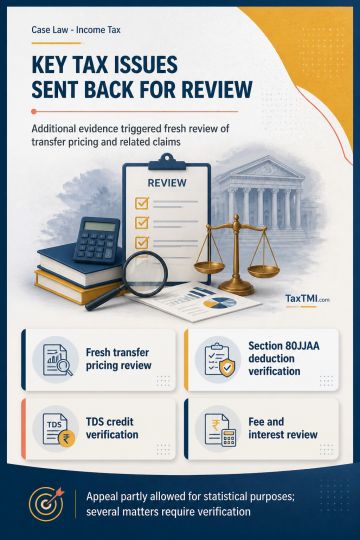
Additional evidence in transfer pricing dispute leads to fresh examination, while tax deductions, TDS credit, fee and refund interest require verifica...
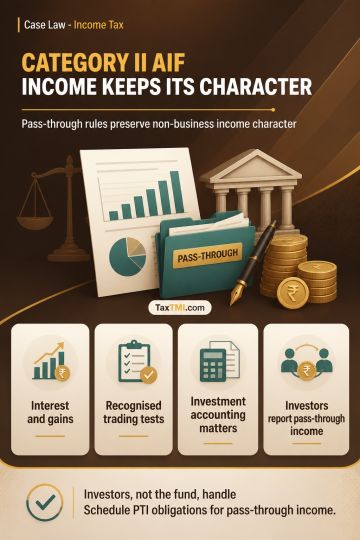
Category II AIF pass-through taxation preserves non-business income character; investment receipts cannot be reclassified without applying recognised ...
The case pertains to the import of restricted goods, specifically marbles and mosaics, under the Import Policy at a value lower than the Minimum Import Price notified by the Directorate General of Foreign Trade (DGFT). The importer violated DGFT Notifications by importing these items below the prescribed minimum prices of US$ 60 per SQM for marbles and US$ 80 per SQM for mosaics, rendering the imports liable for confiscation under the Customs Act and the Foreign Trade (Development and Regulation) Act, along with penalties. The Adjudicating Authority initially ordered confiscation and penalties, but the importer agreed to enhance the value as per the Minimum Import Price. The CESTAT upheld the demand for duty at the enhanced value based on the Minimum Import Price but set aside the confiscation and penalties, partially allowing the appeal. The CESTAT held that once the value was enhanced as per the Notifications, there was no legal necessity to treat the imports as contravening the Acts.
The case pertains to the import of restricted goods, specifically marbles and mosaics, under the Import Policy at a value lower than the Minimum Import Price notified by the Directorate General of Foreign Trade (DGFT). The importer violated DGFT Notifications by importing these items below the prescribed minimum prices of US$ 60 per SQM for marbles and US$ 80 per SQM for mosaics, rendering the imports liable for confiscation under the Customs Act and the Foreign Trade (Development and Regulation) Act, along with penalties. The Adjudicating Authority initially ordered confiscation and penalties, but the importer agreed to enhance the value as per the Minimum Import Price. The CESTAT upheld the demand for duty at the enhanced value based on the Minimum Import Price but set aside the confiscation and penalties, partially allowing the appeal. The CESTAT held that once the value was enhanced as per the Notifications, there was no legal necessity to treat the imports as contravening the Acts.
Note: It is a system-generated summary and is for quick reference only.
 TaxTMI
 of 4805









 Join Channel


 TaxTMI
