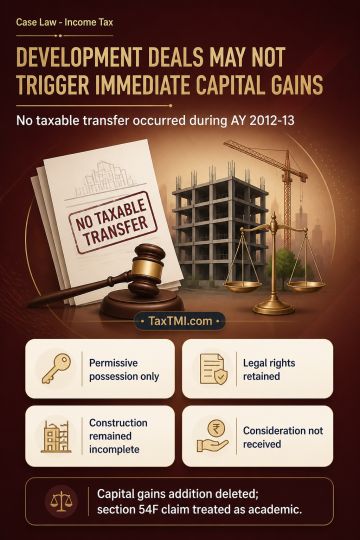
Development agreements require legal possession or effective enjoyment for capital gains transfer; permissive possession and deferred consideration de...
Prolonged sterilisation of development rights supports capital-gains treatment, while business-income disallowances cannot govern capital-gains comput...
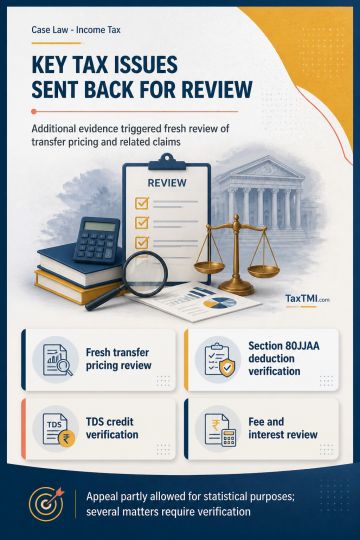
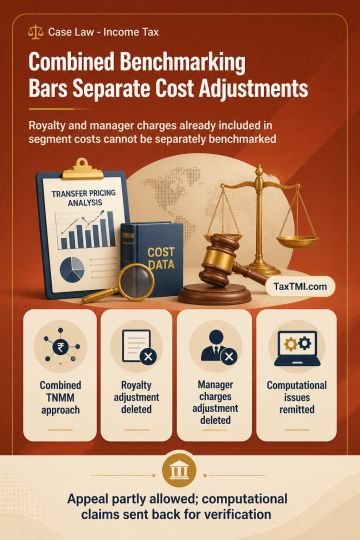
Additional evidence in transfer pricing dispute leads to fresh examination, while tax deductions, TDS credit, fee and refund interest require verifica...
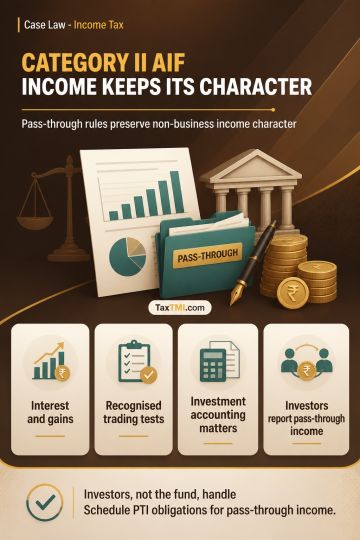
Category II AIF pass-through taxation preserves non-business income character; investment receipts cannot be reclassified without applying recognised ...
Validity of SEBI Settlement Proceedings Regulations, specifically Regulations 6(1)(f) and 13(2)(ba) of the SEBI (Settlement Proceedings) Regulations, 2018. It examines allegations against noticees of acting in concert while acquiring shares without required disclosures, creating false trading appearances, and manipulative trading practices. The court held that the allegations in the show cause notice, if proven, are grave. It observed that the petitioners' objective was to stall adjudication proceedings by filing settlement applications and refusing to cooperate. The court rejected arguments of excessive delegation and manifest arbitrariness in the Regulations, stating they conform to the parent Acts and do not lack logical consistency or determining principles. It upheld the rejection of the petitioners' settlement proposal, finding the conditions imposed reasonable considering the allegations. The court criticized attempts to stall proceedings through constitutional challenges and interim relief pleas, emphasizing a pragmatic approach balancing defaulters' and public interests.
Validity of SEBI Settlement Proceedings Regulations, specifically Regulations 6(1)(f) and 13(2)(ba) of the SEBI (Settlement Proceedings) Regulations, 2018. It examines allegations against noticees of acting in concert while acquiring shares without required disclosures, creating false trading appearances, and manipulative trading practices. The court held that the allegations in the show cause notice, if proven, are grave. It observed that the petitioners' objective was to stall adjudication proceedings by filing settlement applications and refusing to cooperate. The court rejected arguments of excessive delegation and manifest arbitrariness in the Regulations, stating they conform to the parent Acts and do not lack logical consistency or determining principles. It upheld the rejection of the petitioners' settlement proposal, finding the conditions imposed reasonable considering the allegations. The court criticized attempts to stall proceedings through constitutional challenges and interim relief pleas, emphasizing a pragmatic approach balancing defaulters' and public interests.
Note: It is a system-generated summary and is for quick reference only.
 TaxTMI
 of 4805













 Join Channel


 TaxTMI
