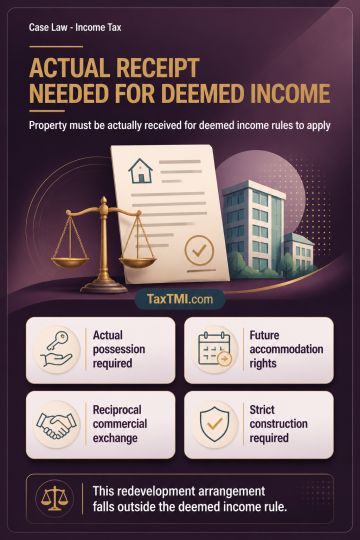
Receipt of immovable property requires actual possession or enjoyment; redevelopment allotments exchanged for tenancy rights fall outside deemed incom...
Section 80P deduction covers Souharda credit societies, including qualifying surplus-deposit interest, subject to member KYC verification for cash dep...
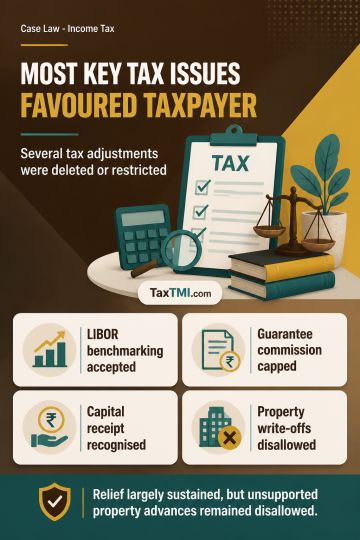
Transfer-pricing benchmarking and capital-receipt principles sustained taxpayer relief, while unsupported property-advance write-offs remained disallo...
Validity of SEBI Settlement Proceedings Regulations, specifically Regulations 6(1)(f) and 13(2)(ba) of the SEBI (Settlement Proceedings) Regulations, 2018. It examines allegations against noticees of acting in concert while acquiring shares without required disclosures, creating false trading appearances, and manipulative trading practices. The court held that the allegations in the show cause notice, if proven, are grave. It observed that the petitioners' objective was to stall adjudication proceedings by filing settlement applications and refusing to cooperate. The court rejected arguments of excessive delegation and manifest arbitrariness in the Regulations, stating they conform to the parent Acts and do not lack logical consistency or determining principles. It upheld the rejection of the petitioners' settlement proposal, finding the conditions imposed reasonable considering the allegations. The court criticized attempts to stall proceedings through constitutional challenges and interim relief pleas, emphasizing a pragmatic approach balancing defaulters' and public interests.
Validity of SEBI Settlement Proceedings Regulations, specifically Regulations 6(1)(f) and 13(2)(ba) of the SEBI (Settlement Proceedings) Regulations, 2018. It examines allegations against noticees of acting in concert while acquiring shares without required disclosures, creating false trading appearances, and manipulative trading practices. The court held that the allegations in the show cause notice, if proven, are grave. It observed that the petitioners' objective was to stall adjudication proceedings by filing settlement applications and refusing to cooperate. The court rejected arguments of excessive delegation and manifest arbitrariness in the Regulations, stating they conform to the parent Acts and do not lack logical consistency or determining principles. It upheld the rejection of the petitioners' settlement proposal, finding the conditions imposed reasonable considering the allegations. The court criticized attempts to stall proceedings through constitutional challenges and interim relief pleas, emphasizing a pragmatic approach balancing defaulters' and public interests.
Note: It is a system-generated summary and is for quick reference only.
 TaxTMI
 of 4805














 Join Channel


 TaxTMI
