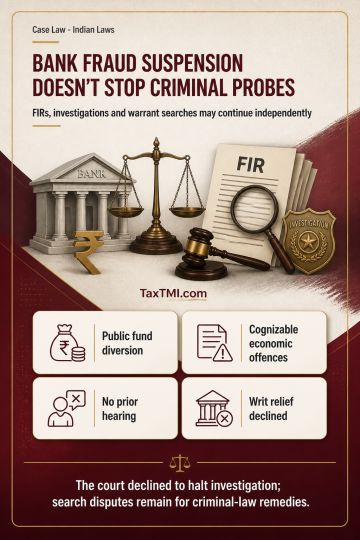
Administrative fraud classification suspension does not halt independent criminal investigation or warrant-based searches into alleged economic offenc...
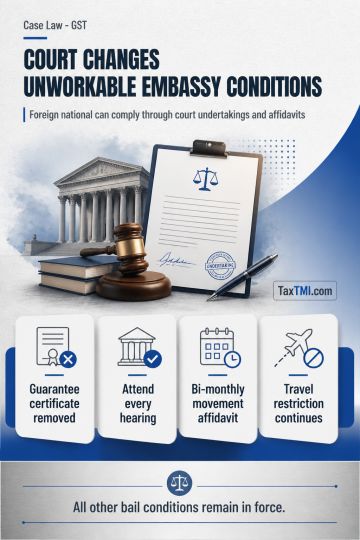
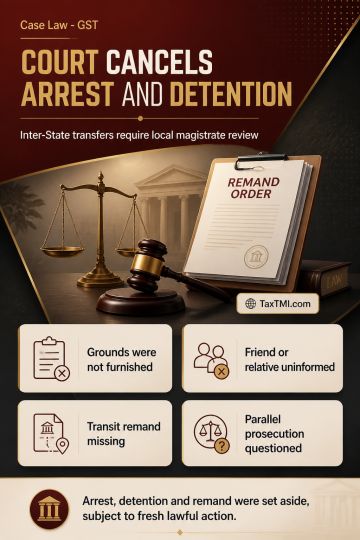
Arrest safeguards and transit remand requirements invalidated detention following inter-State transfer without communicated grounds or magistrate auth...
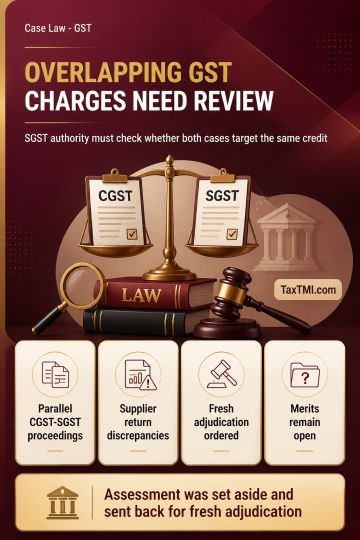
Arrest safeguards require disclosed grounds, relative intimation and transit remand, while duplicate prosecution under the CGST framework is unsustain...
Document Identification Number defects can invalidate GST assessments, with delayed challenges entertained conditionally where patent irregularities e...
Validity of SEBI Settlement Proceedings Regulations, specifically Regulations 6(1)(f) and 13(2)(ba) of the SEBI (Settlement Proceedings) Regulations, 2018. It examines allegations against noticees of acting in concert while acquiring shares without required disclosures, creating false trading appearances, and manipulative trading practices. The court held that the allegations in the show cause notice, if proven, are grave. It observed that the petitioners' objective was to stall adjudication proceedings by filing settlement applications and refusing to cooperate. The court rejected arguments of excessive delegation and manifest arbitrariness in the Regulations, stating they conform to the parent Acts and do not lack logical consistency or determining principles. It upheld the rejection of the petitioners' settlement proposal, finding the conditions imposed reasonable considering the allegations. The court criticized attempts to stall proceedings through constitutional challenges and interim relief pleas, emphasizing a pragmatic approach balancing defaulters' and public interests.
Validity of SEBI Settlement Proceedings Regulations, specifically Regulations 6(1)(f) and 13(2)(ba) of the SEBI (Settlement Proceedings) Regulations, 2018. It examines allegations against noticees of acting in concert while acquiring shares without required disclosures, creating false trading appearances, and manipulative trading practices. The court held that the allegations in the show cause notice, if proven, are grave. It observed that the petitioners' objective was to stall adjudication proceedings by filing settlement applications and refusing to cooperate. The court rejected arguments of excessive delegation and manifest arbitrariness in the Regulations, stating they conform to the parent Acts and do not lack logical consistency or determining principles. It upheld the rejection of the petitioners' settlement proposal, finding the conditions imposed reasonable considering the allegations. The court criticized attempts to stall proceedings through constitutional challenges and interim relief pleas, emphasizing a pragmatic approach balancing defaulters' and public interests.
Note: It is a system-generated summary and is for quick reference only.
 TaxTMI
 of 4803











 Join Channel


 TaxTMI
