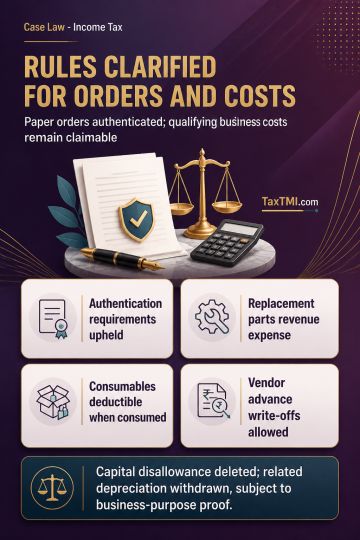
Authentication of paper assessment orders upheld, while qualifying repairs, consumables and vendor advance write-offs remain deductible business claim...
Transaction value cannot be rejected solely on non-statutory valuation guidelines without corroborative evidence supporting reassessment of final cust...
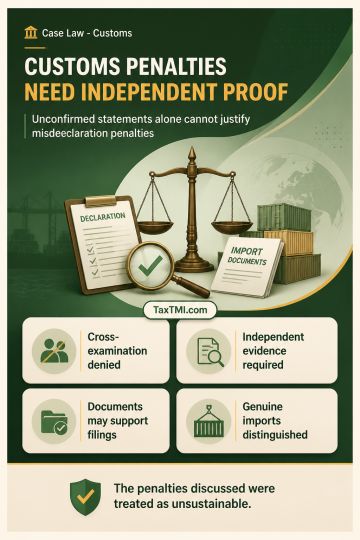
Cross-examination rights and corroborated evidence limit customs penalties for misdeclaration in genuine import transactions involving documented clea...
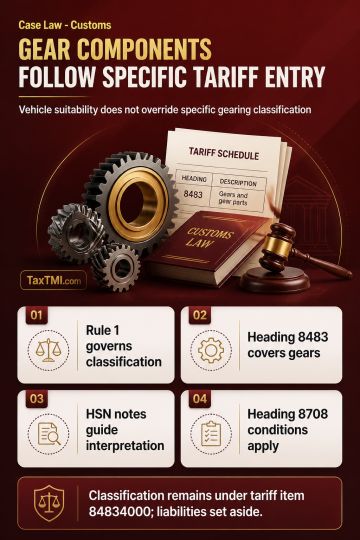
Tariff classification of vehicle gear components follows the specific gearing entry, displacing motor-vehicle parts classification and related liabili...
Necessary-party requirements limit impleadment of independent entities, while deferred consideration does not create an appealable adverse determinati...
Validity of SEBI Settlement Proceedings Regulations, specifically Regulations 6(1)(f) and 13(2)(ba) of the SEBI (Settlement Proceedings) Regulations, 2018. It examines allegations against noticees of acting in concert while acquiring shares without required disclosures, creating false trading appearances, and manipulative trading practices. The court held that the allegations in the show cause notice, if proven, are grave. It observed that the petitioners' objective was to stall adjudication proceedings by filing settlement applications and refusing to cooperate. The court rejected arguments of excessive delegation and manifest arbitrariness in the Regulations, stating they conform to the parent Acts and do not lack logical consistency or determining principles. It upheld the rejection of the petitioners' settlement proposal, finding the conditions imposed reasonable considering the allegations. The court criticized attempts to stall proceedings through constitutional challenges and interim relief pleas, emphasizing a pragmatic approach balancing defaulters' and public interests.
Validity of SEBI Settlement Proceedings Regulations, specifically Regulations 6(1)(f) and 13(2)(ba) of the SEBI (Settlement Proceedings) Regulations, 2018. It examines allegations against noticees of acting in concert while acquiring shares without required disclosures, creating false trading appearances, and manipulative trading practices. The court held that the allegations in the show cause notice, if proven, are grave. It observed that the petitioners' objective was to stall adjudication proceedings by filing settlement applications and refusing to cooperate. The court rejected arguments of excessive delegation and manifest arbitrariness in the Regulations, stating they conform to the parent Acts and do not lack logical consistency or determining principles. It upheld the rejection of the petitioners' settlement proposal, finding the conditions imposed reasonable considering the allegations. The court criticized attempts to stall proceedings through constitutional challenges and interim relief pleas, emphasizing a pragmatic approach balancing defaulters' and public interests.
Note: It is a system-generated summary and is for quick reference only.
 TaxTMI
 of 4803

















 Join Channel


 TaxTMI
