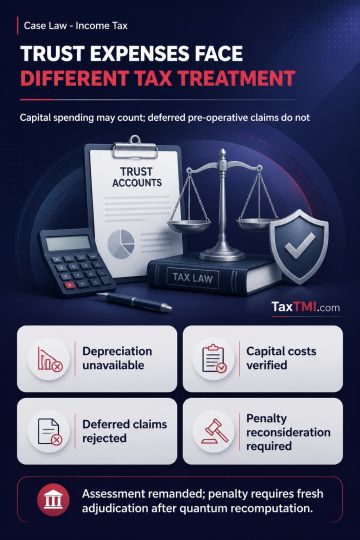
Charitable trust income application permits verified capital expenditure but rejects deferred pre-operative claims and requires reconsideration of con...
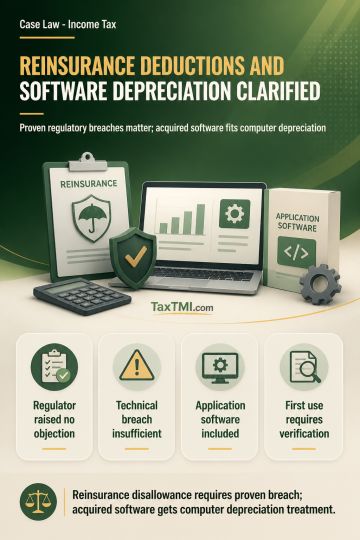
Reinsurance premium deductions require established regulatory breaches, while independently acquired software qualifies within the computer depreciati...
Rectification of mistake remains limited to self-evident record errors, preventing merits review through miscellaneous applications and preserving fin...
Tender creditworthiness conditions may extend to de facto Promoter Directors, with post-participation challenges generally barred absent arbitrariness...
Corporate representation in PMLA summons proceedings permitted through an authorised signatory, subject to directors' continuing cooperation and atten...
The NCLAT dismissed the appeal challenging the quashing of the e-auction conducted on 31.01.2024 for the sale of the Corporate Debtor as a going concern and the rejection of the appellant's proposed Scheme of Arrangement u/s 230 of the Companies Act, 2013. The Tribunal held that with the enactment of the IBC, the significance of Section 230(1) in addressing insolvency has diminished. The follow-up process u/s 230(1) is necessary only when the Liquidator fails to sustain the Corporate Debtor as a going concern. Regulation 32A mandates the Liquidator to prioritize selling the Corporate Debtor as a going concern to maximize value. Minor discrepancies during the bid process were deemed inconsequential as the Successful Bidder is operating the Corporate Debtor as a going concern, fulfilling the IBC's objective. The appeal lacked merits and was dismissed.
The NCLAT dismissed the appeal challenging the quashing of the e-auction conducted on 31.01.2024 for the sale of the Corporate Debtor as a going concern and the rejection of the appellant's proposed Scheme of Arrangement u/s 230 of the Companies Act, 2013. The Tribunal held that with the enactment of the IBC, the significance of Section 230(1) in addressing insolvency has diminished. The follow-up process u/s 230(1) is necessary only when the Liquidator fails to sustain the Corporate Debtor as a going concern. Regulation 32A mandates the Liquidator to prioritize selling the Corporate Debtor as a going concern to maximize value. Minor discrepancies during the bid process were deemed inconsequential as the Successful Bidder is operating the Corporate Debtor as a going concern, fulfilling the IBC's objective. The appeal lacked merits and was dismissed.
Note: It is a system-generated summary and is for quick reference only.
 TaxTMI
 of 4805













 Join Channel


 TaxTMI
