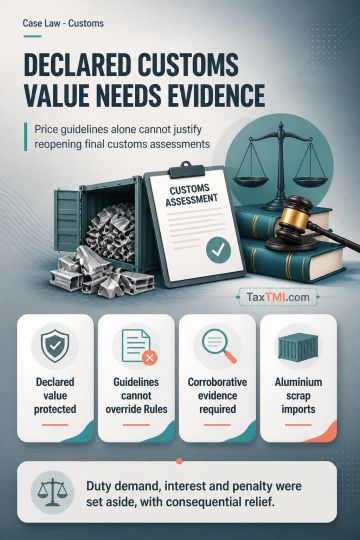
Transaction value cannot be rejected solely on non-statutory valuation guidelines without corroborative evidence supporting reassessment of final cust...
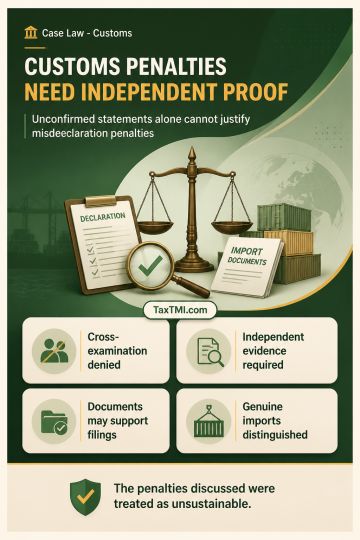
Cross-examination rights and corroborated evidence limit customs penalties for misdeclaration in genuine import transactions involving documented clea...
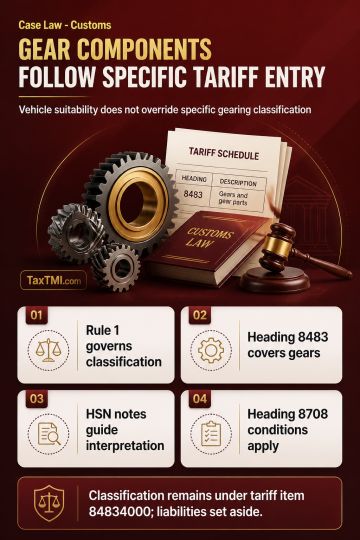
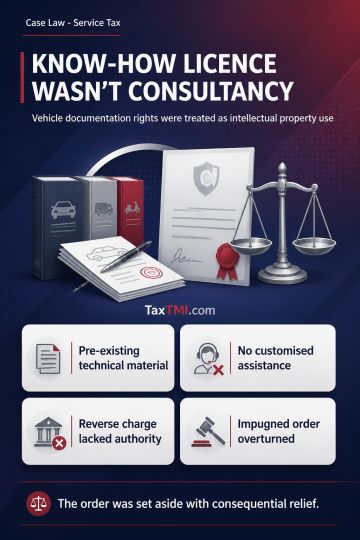
Tariff classification of vehicle gear components follows the specific gearing entry, displacing motor-vehicle parts classification and related liabili...
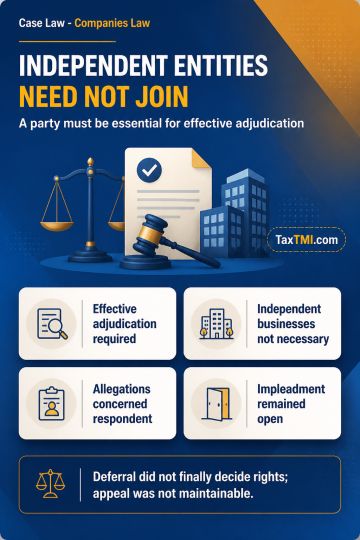
Necessary-party requirements limit impleadment of independent entities, while deferred consideration does not create an appealable adverse determinati...
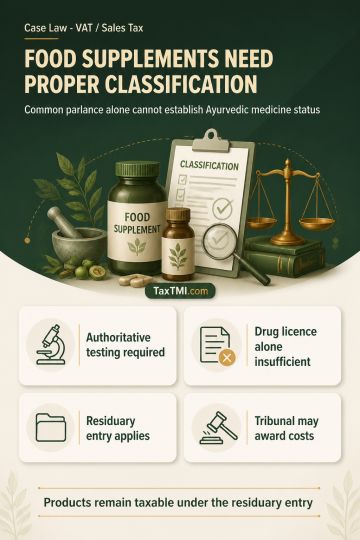
Food supplement classification requires common parlance and authoritative tests, preventing treatment as proprietary Ayurvedic medicines without suppo...
The appellant challenged the summoning order on the ground that the complaint was not premature, as it was filed within the limitation period of one month from the cause of action u/s 138 of the Negotiable Instruments Act, 1881. The SC held that the cause of action for the complainant arises when there is no payment of the dishonored cheque amount within fifteen days from the receipt of the notice. In this case, the legal notice was received on 01.10.2019, and the reply was given on 16.10.2019 without payment. Therefore, the complaint filed on 23.10.2019 was within the one-month limitation period from 16.10.2019 as per Section 142(1)(b) of the Act. The HC erred in construing the limitation period from the reply date instead of the non-payment date. The SC set aside the HC order and revived the summoning order, allowing the appeal.
The appellant challenged the summoning order on the ground that the complaint was not premature, as it was filed within the limitation period of one month from the cause of action u/s 138 of the Negotiable Instruments Act, 1881. The SC held that the cause of action for the complainant arises when there is no payment of the dishonored cheque amount within fifteen days from the receipt of the notice. In this case, the legal notice was received on 01.10.2019, and the reply was given on 16.10.2019 without payment. Therefore, the complaint filed on 23.10.2019 was within the one-month limitation period from 16.10.2019 as per Section 142(1)(b) of the Act. The HC erred in construing the limitation period from the reply date instead of the non-payment date. The SC set aside the HC order and revived the summoning order, allowing the appeal.
Note: It is a system-generated summary and is for quick reference only.
 TaxTMI
 of 4800



 Join Channel


 TaxTMI
