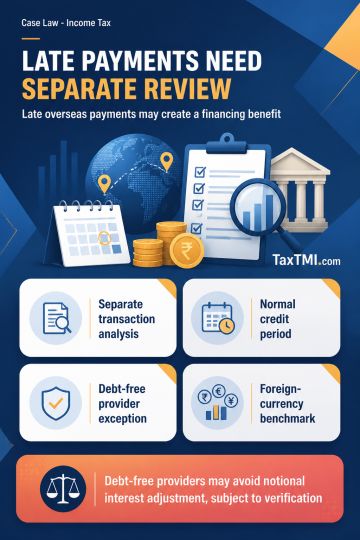
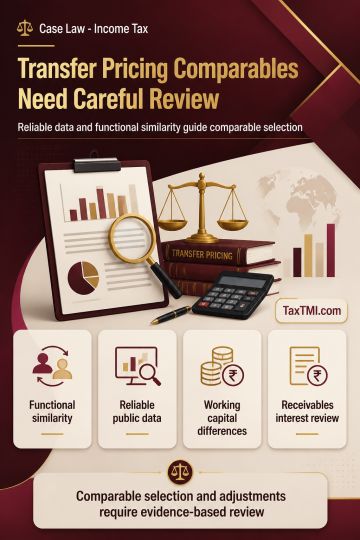
Transfer pricing comparability requires functional alignment, reliable financial data, and careful review of working capital and receivables adjustmen...
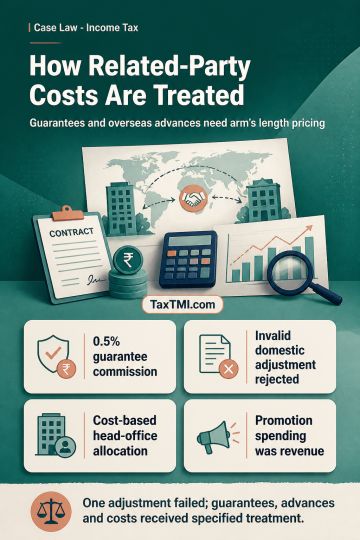
Transfer pricing rules require benchmarking corporate guarantees and associated-enterprise advances, while invalid domestic-transaction adjustments ca...
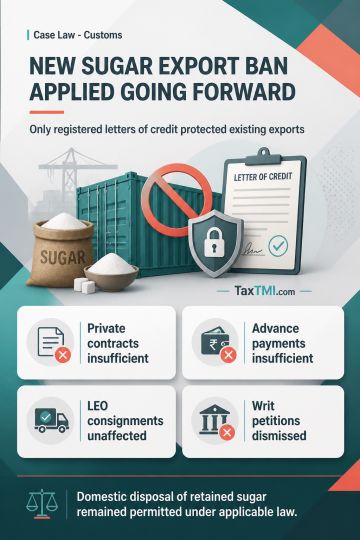
Prospective sugar export prohibition required registered letters of credit; private contracts and export quotas created no enforceable continuation ri...
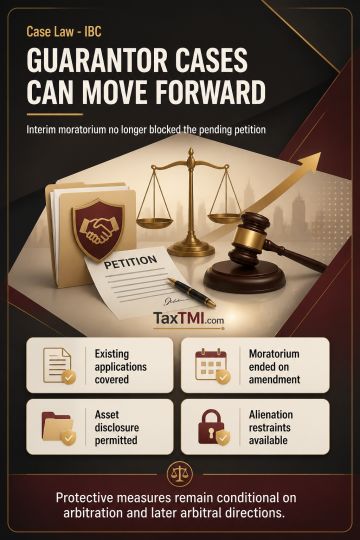
Retroactive interim-moratorium exclusion permits protective asset disclosure and preservation measures against personal guarantors pending arbitration...
The appellant challenged the summoning order on the ground that the complaint was not premature, as it was filed within the limitation period of one month from the cause of action u/s 138 of the Negotiable Instruments Act, 1881. The SC held that the cause of action for the complainant arises when there is no payment of the dishonored cheque amount within fifteen days from the receipt of the notice. In this case, the legal notice was received on 01.10.2019, and the reply was given on 16.10.2019 without payment. Therefore, the complaint filed on 23.10.2019 was within the one-month limitation period from 16.10.2019 as per Section 142(1)(b) of the Act. The HC erred in construing the limitation period from the reply date instead of the non-payment date. The SC set aside the HC order and revived the summoning order, allowing the appeal.
The appellant challenged the summoning order on the ground that the complaint was not premature, as it was filed within the limitation period of one month from the cause of action u/s 138 of the Negotiable Instruments Act, 1881. The SC held that the cause of action for the complainant arises when there is no payment of the dishonored cheque amount within fifteen days from the receipt of the notice. In this case, the legal notice was received on 01.10.2019, and the reply was given on 16.10.2019 without payment. Therefore, the complaint filed on 23.10.2019 was within the one-month limitation period from 16.10.2019 as per Section 142(1)(b) of the Act. The HC erred in construing the limitation period from the reply date instead of the non-payment date. The SC set aside the HC order and revived the summoning order, allowing the appeal.
Note: It is a system-generated summary and is for quick reference only.
 TaxTMI
 of 4798



 Join Channel


 TaxTMI
