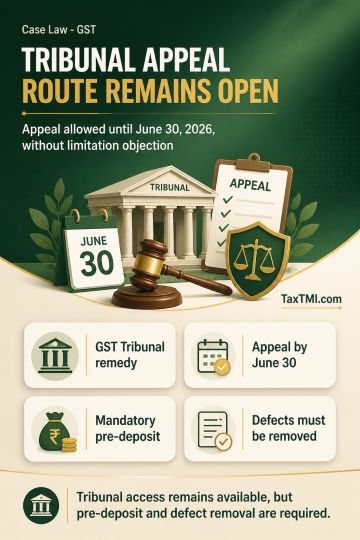
Transfer pricing and tax deductions upheld on established principles, while employee contributions and warranty provisions returned for fresh examinat...
Captive transfer pricing relies on industrial consumer tariffs, while genuine quotations can benchmark effluent treatment transfers under the Other Me...
Specific tariff classification for ophthalmic instruments and extended limitation principles determine the treatment of duty demands, confiscation, an...
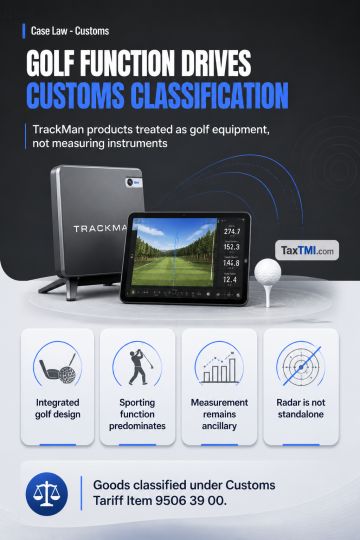
Integrated golf function determines classification, placing launch monitors and simulators under other golf equipment rather than measuring instrument...
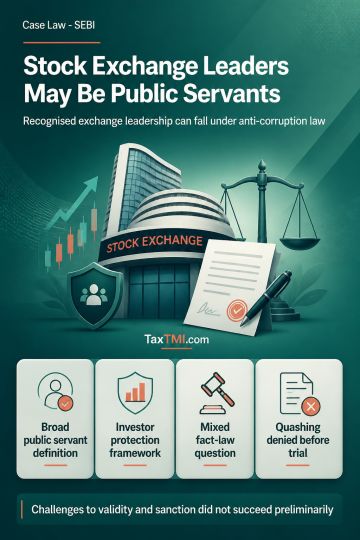
Public servant status under anti-corruption law extends to recognised stock exchange leadership; constitutional and sanction challenges do not succeed...
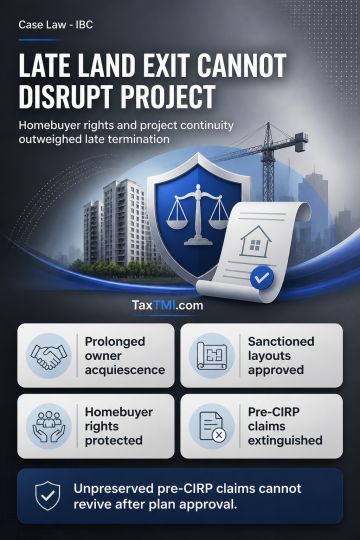
Acquiescence, homebuyer protection and clean-slate resolution principles prevent landowners from disrupting an integrated project through late termina...
The Assessee, a regular investor in shares, made investments and sold a particular script when prices were high, resulting in Long Term Capital Gains (LTCG). The Assessing Officer (AO) treated the LTCG as bogus and made an addition u/s 68, relying solely on the report and statements recorded by the Investigating Wing, without conducting an independent inquiry or corroborating the evidence. The ITAT held that merely identifying a script as a penny stock does not render all transactions in it as bogus. The Assessee had produced documents showing genuine transactions, and there was no adverse report from SEBI or other authorities against the script. The AO erred in denying the Assessee's request for cross-examination of the person alleging accommodation entries through LTCG. The ITAT ruled in favor of the Assessee, emphasizing the need for an independent inquiry by the AO and corroboration of evidence from other sources before treating transactions as bogus.
The Assessee, a regular investor in shares, made investments and sold a particular script when prices were high, resulting in Long Term Capital Gains (LTCG). The Assessing Officer (AO) treated the LTCG as bogus and made an addition u/s 68, relying solely on the report and statements recorded by the Investigating Wing, without conducting an independent inquiry or corroborating the evidence. The ITAT held that merely identifying a script as a penny stock does not render all transactions in it as bogus. The Assessee had produced documents showing genuine transactions, and there was no adverse report from SEBI or other authorities against the script. The AO erred in denying the Assessee's request for cross-examination of the person alleging accommodation entries through LTCG. The ITAT ruled in favor of the Assessee, emphasizing the need for an independent inquiry by the AO and corroboration of evidence from other sources before treating transactions as bogus.
Note: It is a system-generated summary and is for quick reference only.
 TaxTMI
 of 4803










 Join Channel


 TaxTMI