Origin Declaration authentication governs preferential tariff claims under India-UK CETA, requiring a validated reference number before import clearan...
Separate assessment orders for different years remain valid when distinct notices and hearing opportunities prevent prejudice from combined proceeding...
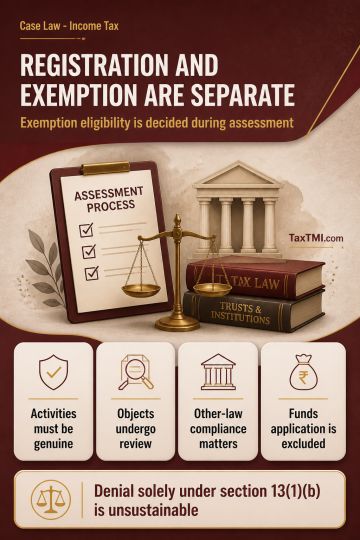
Defined public benefit can retain charitable character; registration renewal requires examining genuine activities and legal compliance, not surplus a...
Capital reduction is distinct from share buy-back, preventing buy-back tax; restructuring interest and related business deductions also survive scruti...
The Assessee, a regular investor in shares, made investments and sold a particular script when prices were high, resulting in Long Term Capital Gains (LTCG). The Assessing Officer (AO) treated the LTCG as bogus and made an addition u/s 68, relying solely on the report and statements recorded by the Investigating Wing, without conducting an independent inquiry or corroborating the evidence. The ITAT held that merely identifying a script as a penny stock does not render all transactions in it as bogus. The Assessee had produced documents showing genuine transactions, and there was no adverse report from SEBI or other authorities against the script. The AO erred in denying the Assessee's request for cross-examination of the person alleging accommodation entries through LTCG. The ITAT ruled in favor of the Assessee, emphasizing the need for an independent inquiry by the AO and corroboration of evidence from other sources before treating transactions as bogus.
The Assessee, a regular investor in shares, made investments and sold a particular script when prices were high, resulting in Long Term Capital Gains (LTCG). The Assessing Officer (AO) treated the LTCG as bogus and made an addition u/s 68, relying solely on the report and statements recorded by the Investigating Wing, without conducting an independent inquiry or corroborating the evidence. The ITAT held that merely identifying a script as a penny stock does not render all transactions in it as bogus. The Assessee had produced documents showing genuine transactions, and there was no adverse report from SEBI or other authorities against the script. The AO erred in denying the Assessee's request for cross-examination of the person alleging accommodation entries through LTCG. The ITAT ruled in favor of the Assessee, emphasizing the need for an independent inquiry by the AO and corroboration of evidence from other sources before treating transactions as bogus.
Note: It is a system-generated summary and is for quick reference only.
 TaxTMI
 of 4803















 Join Channel


 TaxTMI
