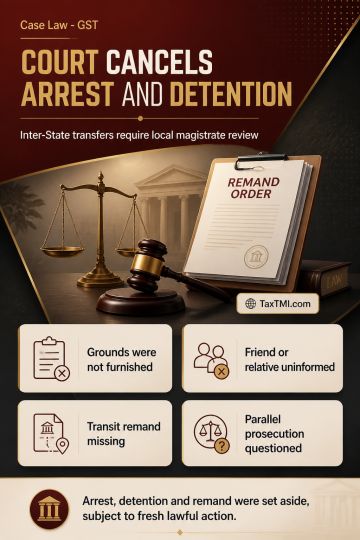
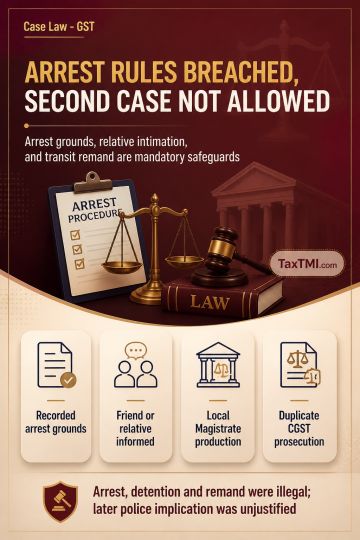
Arrest safeguards and transit remand requirements invalidated detention following inter-State transfer without communicated grounds or magistrate auth...
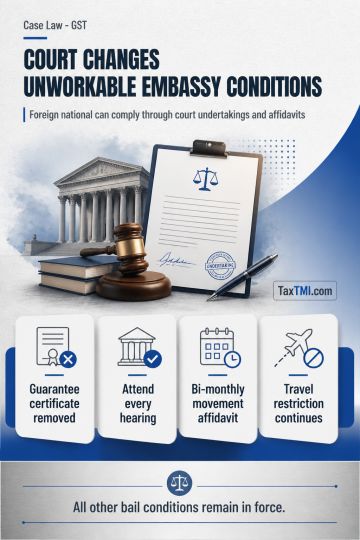
Arrest safeguards require disclosed grounds, relative intimation and transit remand, while duplicate prosecution under the CGST framework is unsustain...
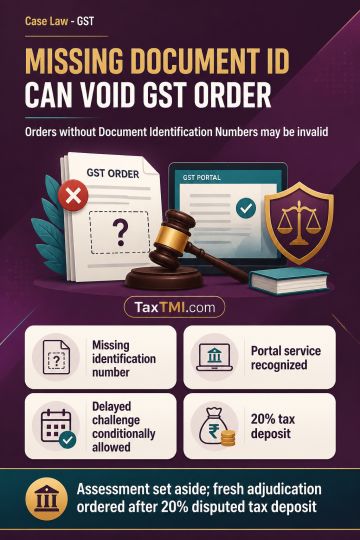
Document Identification Number defects can invalidate GST assessments, with delayed challenges entertained conditionally where patent irregularities e...
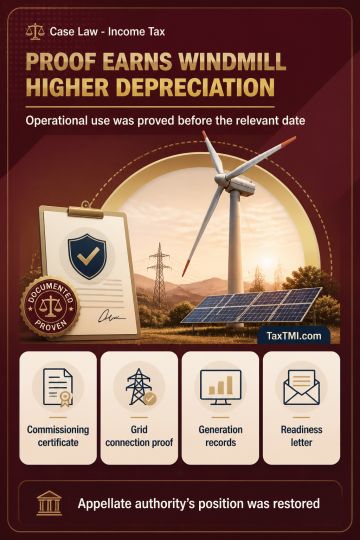
Windmill commissioning evidence supported higher depreciation where grid connection and electricity generation proved operational use before the relev...
The Assessee, a regular investor in shares, made investments and sold a particular script when prices were high, resulting in Long Term Capital Gains (LTCG). The Assessing Officer (AO) treated the LTCG as bogus and made an addition u/s 68, relying solely on the report and statements recorded by the Investigating Wing, without conducting an independent inquiry or corroborating the evidence. The ITAT held that merely identifying a script as a penny stock does not render all transactions in it as bogus. The Assessee had produced documents showing genuine transactions, and there was no adverse report from SEBI or other authorities against the script. The AO erred in denying the Assessee's request for cross-examination of the person alleging accommodation entries through LTCG. The ITAT ruled in favor of the Assessee, emphasizing the need for an independent inquiry by the AO and corroboration of evidence from other sources before treating transactions as bogus.
The Assessee, a regular investor in shares, made investments and sold a particular script when prices were high, resulting in Long Term Capital Gains (LTCG). The Assessing Officer (AO) treated the LTCG as bogus and made an addition u/s 68, relying solely on the report and statements recorded by the Investigating Wing, without conducting an independent inquiry or corroborating the evidence. The ITAT held that merely identifying a script as a penny stock does not render all transactions in it as bogus. The Assessee had produced documents showing genuine transactions, and there was no adverse report from SEBI or other authorities against the script. The AO erred in denying the Assessee's request for cross-examination of the person alleging accommodation entries through LTCG. The ITAT ruled in favor of the Assessee, emphasizing the need for an independent inquiry by the AO and corroboration of evidence from other sources before treating transactions as bogus.
Note: It is a system-generated summary and is for quick reference only.
 TaxTMI
 of 4800




 Join Channel


 TaxTMI
