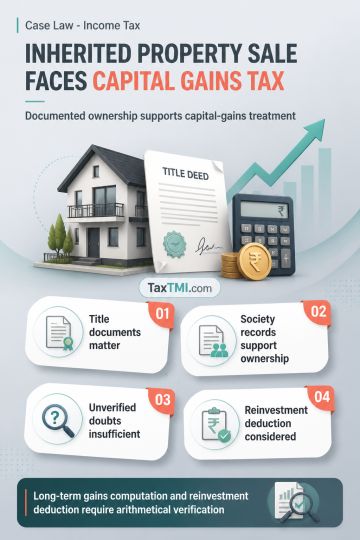
Inherited property sale proceeds require capital-gains treatment where ownership is supported by evidence, not suspicion or unverified signature doubt...
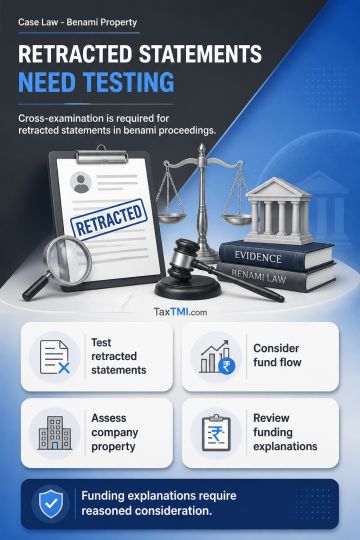
Cross-examination of retracted statements is essential where foundational evidence supports a benami allegation and documented funding explanations re...
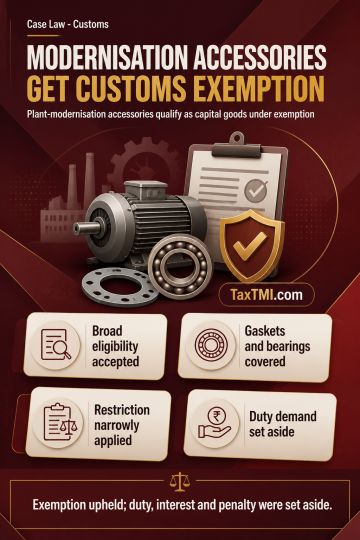
Capital-goods exemption covers plant-modernisation accessories, while the import restriction applies only to earlier capital-goods components and spar...
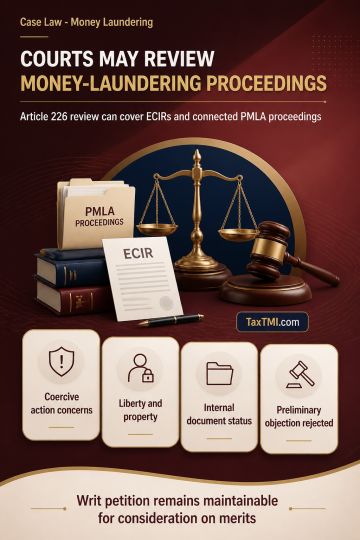
Constitutional judicial review permits challenges to ECIRs and connected money-laundering proceedings where coercive action affects fundamental intere...
The Assessee, a regular investor in shares, made investments and sold a particular script when prices were high, resulting in Long Term Capital Gains (LTCG). The Assessing Officer (AO) treated the LTCG as bogus and made an addition u/s 68, relying solely on the report and statements recorded by the Investigating Wing, without conducting an independent inquiry or corroborating the evidence. The ITAT held that merely identifying a script as a penny stock does not render all transactions in it as bogus. The Assessee had produced documents showing genuine transactions, and there was no adverse report from SEBI or other authorities against the script. The AO erred in denying the Assessee's request for cross-examination of the person alleging accommodation entries through LTCG. The ITAT ruled in favor of the Assessee, emphasizing the need for an independent inquiry by the AO and corroboration of evidence from other sources before treating transactions as bogus.
The Assessee, a regular investor in shares, made investments and sold a particular script when prices were high, resulting in Long Term Capital Gains (LTCG). The Assessing Officer (AO) treated the LTCG as bogus and made an addition u/s 68, relying solely on the report and statements recorded by the Investigating Wing, without conducting an independent inquiry or corroborating the evidence. The ITAT held that merely identifying a script as a penny stock does not render all transactions in it as bogus. The Assessee had produced documents showing genuine transactions, and there was no adverse report from SEBI or other authorities against the script. The AO erred in denying the Assessee's request for cross-examination of the person alleging accommodation entries through LTCG. The ITAT ruled in favor of the Assessee, emphasizing the need for an independent inquiry by the AO and corroboration of evidence from other sources before treating transactions as bogus.
Note: It is a system-generated summary and is for quick reference only.
 TaxTMI
 of 4792




 Join Channel


 TaxTMI