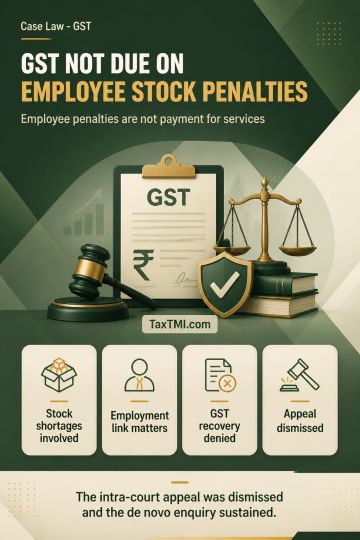
Employee stock-shortage penalties do not constitute consideration for services, preventing GST collection under Schedule II in employment relationship...
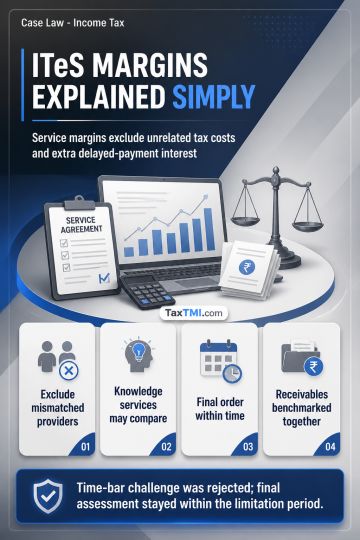
Transfer-pricing treatment of ITeS margins excludes pass-through tax recoveries and separate delayed-receivables interest after working-capital adjust...
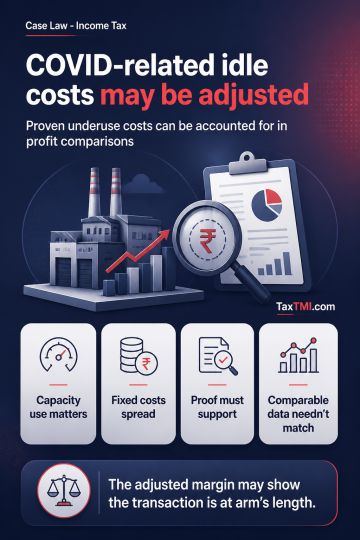
Capacity-utilisation adjustments under TNMM can neutralise substantiated COVID-related idle costs where underutilisation materially affects profitabil...
Page of 4830
Press 'Enter' after typing page number.
181 to 200 of 96587 Results
❮
❯
❯❯
0 / 200
Expand Note
Add to Folder
No Folders have been created
+
Are you sure you want to delete "My most important" ?
The Appellate Tribunal dismissed the appeal filed by the Operational Creditor u/s 9 of the Insolvency and Bankruptcy Code, 2016. The application was initially rejected by the NCLT on the grounds of a pre-existing dispute regarding the issuance of a No Objection Certificate (NOC) by the Operational Creditor to the Corporate Debtor for registering the copyright of a TVC. The Terms and Conditions stipulated that the Operational Creditor would provide the necessary NOC for IP registration, which it failed to do despite repeated demands from the Corporate Debtor. The dispute was genuine, supported by evidence, and arose before the issuance of the Section 8 notice, qualifying as a "pre-existing dispute" - a valid ground for rejecting the Section 9 application. The Appellate Tribunal upheld the NCLT's order, finding no merit in the appeal.
The Appellate Tribunal dismissed the appeal filed by the Operational Creditor u/s 9 of the Insolvency and Bankruptcy Code, 2016. The application was initially rejected by the NCLT on the grounds of a pre-existing dispute regarding the issuance of a No Objection Certificate (NOC) by the Operational Creditor to the Corporate Debtor for registering the copyright of a TVC. The Terms and Conditions stipulated that the Operational Creditor would provide the necessary NOC for IP registration, which it failed to do despite repeated demands from the Corporate Debtor. The dispute was genuine, supported by evidence, and arose before the issuance of the Section 8 notice, qualifying as a "pre-existing dispute" - a valid ground for rejecting the Section 9 application. The Appellate Tribunal upheld the NCLT's order, finding no merit in the appeal.
Note: It is a system-generated summary and is for quick reference only.
 TaxTMI
  TaxTMI
 of 4830



 Join Channel


