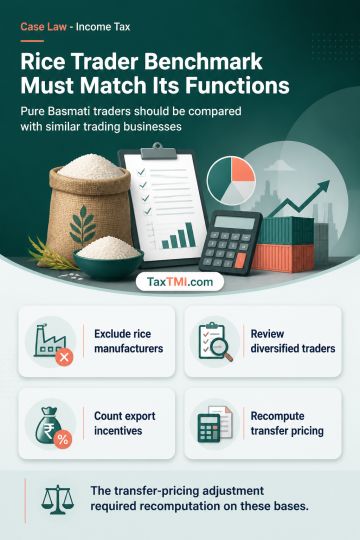
TNMM functional comparability requires excluding rice manufacturers from a pure Basmati rice trader's benchmark and recognising operating export recei...
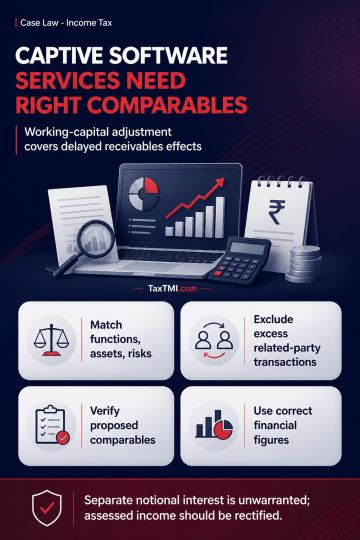
Working-capital adjustment subsumes delayed-receivable effects in TNMM benchmarking of captive software-development services, avoiding separate notion...
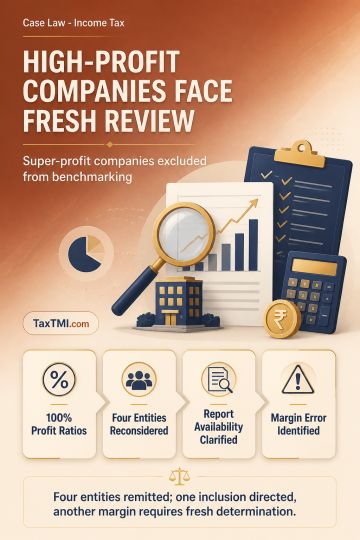
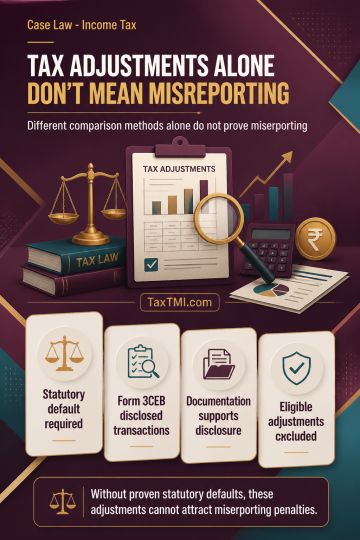
Transfer-pricing comparability requires exclusion of financially illogical super-profit comparables and correction of unsupported annual-report and ma...
Charitable character assessment preserves Section 80G approval despite inclusive spiritual teachings and incidental religious expenditure within the s...
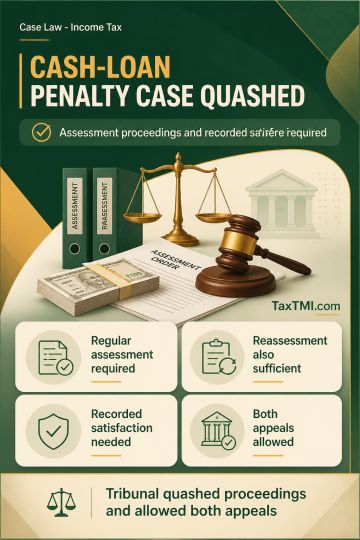
Penalty proceedings for cash-loan acceptance require assessment proceedings and recorded Assessing Officer satisfaction; absent these, the proceedings...
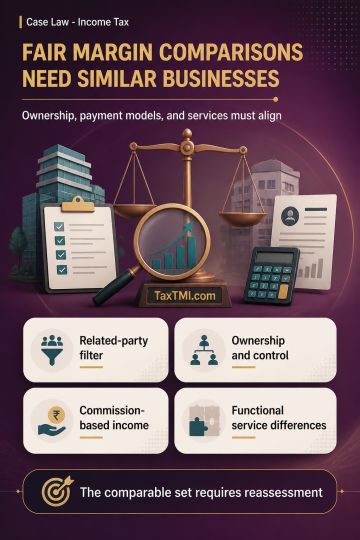
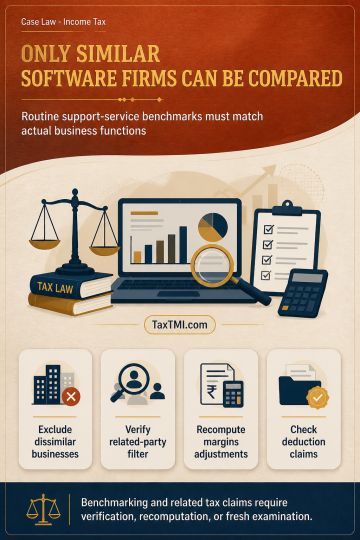
Functional comparability governs software-service benchmarking: dissimilar companies are excluded, while related-party filters, margins and working-ca...
Classification of an end product derived from processing dry dates under the Central Excise Tariff, whether it qualifies as "manufacture" under the Central Excise Act, and the implications for Small Scale Industry (SSI) exemption and penalty. The key points are: The end product, sold as "dry dates cut" or "dry dates chura," underwent processes like washing, deseeding, cutting, drying, sieving, and packing. The appellant contended it should be classified under sub-heading 08041030 as dry dates, while the department argued for sub-heading 20089999 as prepared fruit. Applying the General Rules for Interpretation (GIR), the product aligns with the specific description under Chapter 8 for dry dates rather than the general Chapter 20 for prepared fruits. The processes did not result in a new product distinct from dry dates. Therefore, the end product is correctly classified under Chapter 8, attracting nil duty rate. Consequently, the denial of SSI exemption and imposition of penalty u/s 11AC were improper, as no duty is confirmed. The Tribunal's order was set aside, and the appeal was allowed.
Classification of an end product derived from processing dry dates under the Central Excise Tariff, whether it qualifies as "manufacture" under the Central Excise Act, and the implications for Small Scale Industry (SSI) exemption and penalty. The key points are: The end product, sold as "dry dates cut" or "dry dates chura," underwent processes like washing, deseeding, cutting, drying, sieving, and packing. The appellant contended it should be classified under sub-heading 08041030 as dry dates, while the department argued for sub-heading 20089999 as prepared fruit. Applying the General Rules for Interpretation (GIR), the product aligns with the specific description under Chapter 8 for dry dates rather than the general Chapter 20 for prepared fruits. The processes did not result in a new product distinct from dry dates. Therefore, the end product is correctly classified under Chapter 8, attracting nil duty rate. Consequently, the denial of SSI exemption and imposition of penalty u/s 11AC were improper, as no duty is confirmed. The Tribunal's order was set aside, and the appeal was allowed.
Note: It is a system-generated summary and is for quick reference only.
 TaxTMI
  TaxTMI
 of 4830







 Join Channel


