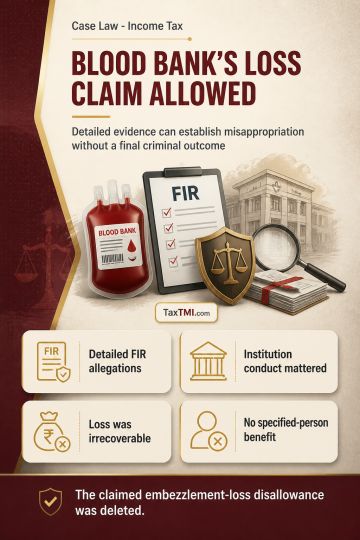
Embezzlement losses in charitable institutions remain allowable when misappropriation is established, irrecoverable, and not a specified-person benefi...
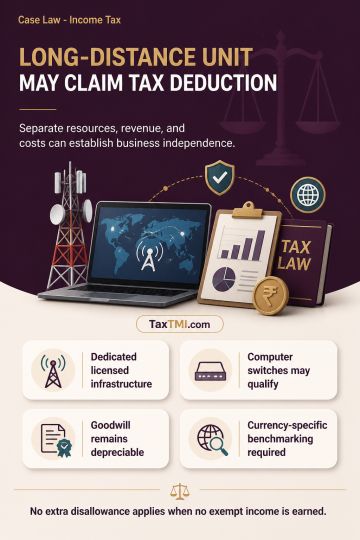
National long-distance undertaking status supports deduction where separately licensed infrastructure, resources, revenue, and expenditure establish c...
Agency reimbursement income follows contractual deposit-liability computation, while pending deposit collections do not constitute deemed-dividend loa...
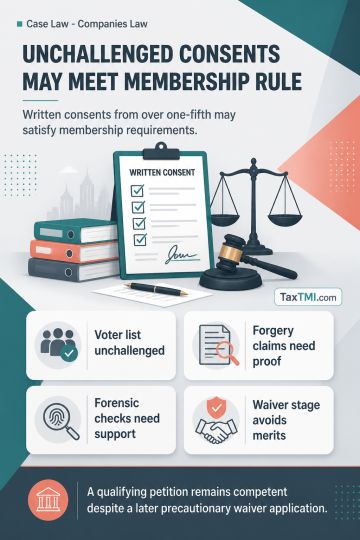
Membership-consent thresholds for oppression petitions are satisfied by unchallenged voter-list consents, while unsupported forgery claims require pro...
The appellants imported goods and procured goods from the Domestic Tariff Area (DTA) under exemption notifications, allowing import and procurement of raw materials and components for export production. Due to technological changes, some imported raw materials and components became obsolete and unfit for manufacturing. The notification was amended, permitting destruction of raw materials under intimation to customs. Although the period of dispute predated the amendment, a harmonious reading of the Foreign Trade Policy (FTP) and the customs notification implied destruction of obsolete raw materials was allowed after intimation to customs if destroyed within the unit, and with permission if destroyed outside. Such permission was granted previously. Technological advancements necessitate provisions for destruction of obsolete goods. The FTP allowed destruction, but the notification lacked this provision until amended. Precedent Tribunal decisions support allowing destruction, and the appeals are allowed.
The appellants imported goods and procured goods from the Domestic Tariff Area (DTA) under exemption notifications, allowing import and procurement of raw materials and components for export production. Due to technological changes, some imported raw materials and components became obsolete and unfit for manufacturing. The notification was amended, permitting destruction of raw materials under intimation to customs. Although the period of dispute predated the amendment, a harmonious reading of the Foreign Trade Policy (FTP) and the customs notification implied destruction of obsolete raw materials was allowed after intimation to customs if destroyed within the unit, and with permission if destroyed outside. Such permission was granted previously. Technological advancements necessitate provisions for destruction of obsolete goods. The FTP allowed destruction, but the notification lacked this provision until amended. Precedent Tribunal decisions support allowing destruction, and the appeals are allowed.
Note: It is a system-generated summary and is for quick reference only.
 TaxTMI
  TaxTMI
 of 4881