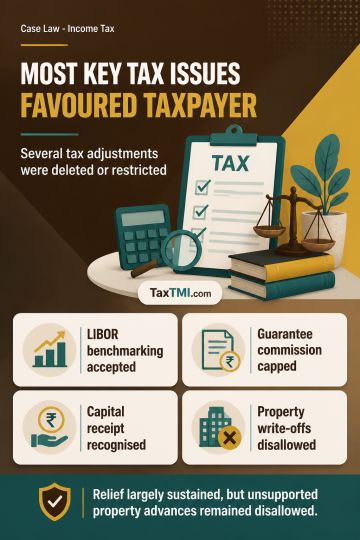
Transfer-pricing benchmarking and capital-receipt principles sustained taxpayer relief, while unsupported property-advance write-offs remained disallo...
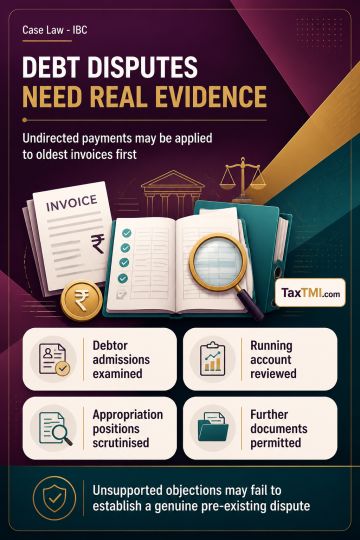
Pre-existing operational debt disputes require genuine evidence, while undirected running-account payments may be appropriated on a first-in-first-out...
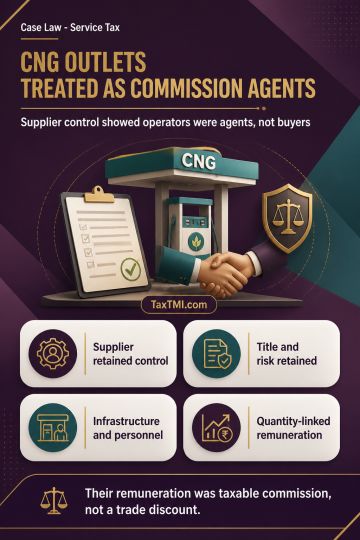
Agency in CNG distribution makes outlet operators commission agents, rendering taxable Business Auxiliary Service rather than purchasing goods for res...
The National Company Law Appellate Tribunal (NCLAT) has remanded the case back to the Adjudicating Authority (AA) to examine and decide the issues in a comprehensive manner, including the application of the appellant in I.A. No. 1412 of 2023, preferably within four weeks. The NCLAT held that there is an absolute bar on recovery of any property occupied or possessed by the Corporate Debtor u/s 14(1)(d) of the Insolvency and Bankruptcy Code. The AA had passed a non-speaking order merely based on the consent of the Resolution Professional (RP) to release the property, without examining the maintainability of such applications by the owner/lessor in view of Section 14(1)(d). The Committee of Creditors (CoC) did not appear to have taken a final decision with proper voting regarding the vacation of the registered office. The RP's decision to release the property was his own and not confirmed by the CoC. The NCLAT found that the AA should have first examined whether it is possible to allow such applications in view of the express provisions of Section 14(1)(d), even if supported by the CoC. The appeal was allowed.
The National Company Law Appellate Tribunal (NCLAT) has remanded the case back to the Adjudicating Authority (AA) to examine and decide the issues in a comprehensive manner, including the application of the appellant in I.A. No. 1412 of 2023, preferably within four weeks. The NCLAT held that there is an absolute bar on recovery of any property occupied or possessed by the Corporate Debtor u/s 14(1)(d) of the Insolvency and Bankruptcy Code. The AA had passed a non-speaking order merely based on the consent of the Resolution Professional (RP) to release the property, without examining the maintainability of such applications by the owner/lessor in view of Section 14(1)(d). The Committee of Creditors (CoC) did not appear to have taken a final decision with proper voting regarding the vacation of the registered office. The RP's decision to release the property was his own and not confirmed by the CoC. The NCLAT found that the AA should have first examined whether it is possible to allow such applications in view of the express provisions of Section 14(1)(d), even if supported by the CoC. The appeal was allowed.
Note: It is a system-generated summary and is for quick reference only.
 TaxTMI
 of 4803







 Join Channel


 TaxTMI
