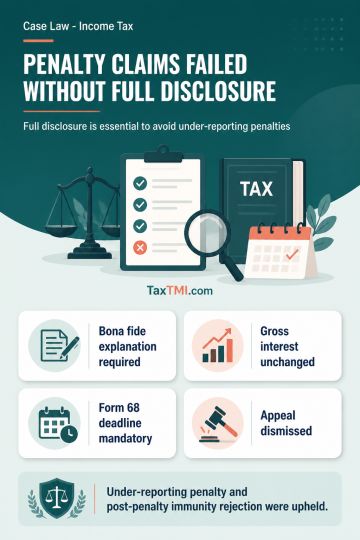
Bona fide disclosure requirements govern under-reporting penalties, and post-penalty immunity applications cannot secure available statutory protectio...
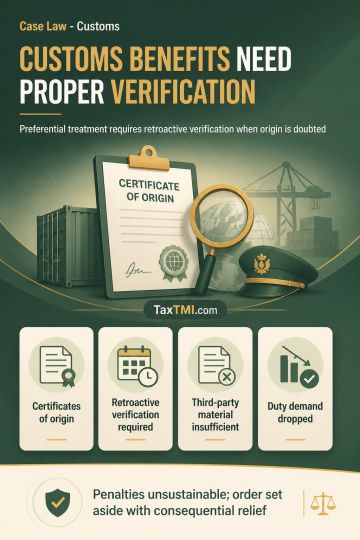
Certificate-of-origin verification procedure governs preferential customs benefits; denial without retroactive verification was set aside with consequ...
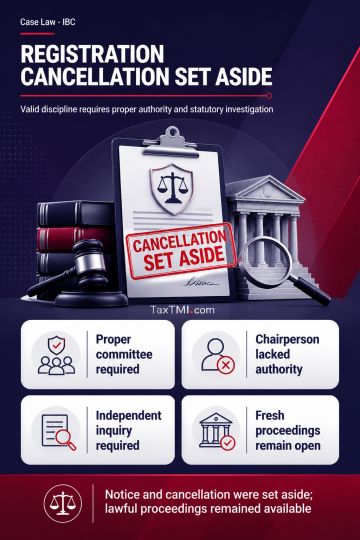
Disciplinary Committee jurisdiction and mandatory investigation requirements invalidated cancellation of an insolvency professional's registration and...
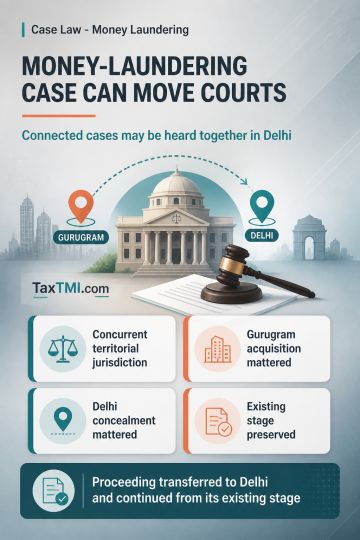
Retention of seized property survives where recorded reasons support proceeds of crime, while stayed investigation periods are excluded from limitatio...
Specified income of Baddi Barotiwala Nalagarh Development Authority receives conditional tax exemption, retrospectively covering its designated assess...
Page of 4805
Press 'Enter' after typing page number.
1221 to 1240 of 96092 Results
❮
❯
❯❯
0 / 200
Expand Note
Add to Folder
No Folders have been created
+
Are you sure you want to delete "My most important" ?
Interpretation of Section 141 of the Negotiable Instruments Act, which deals with vicarious liability for offenses committed by companies u/s 138 (dishonor of cheques). The key points are: Section 141 is a penal provision that must be strictly construed. Liability under this section depends on the role played by the person in the company's affairs, not merely their designation. To attract liability, the person must have been in charge of and responsible for the company's conduct at the time of the offense's commission. Merely being a director or having some association with the company is insufficient. The complaint must specify the accused's role and how they were responsible for the company's conduct. In this case, the petitioner had resigned as director before the relevant events (issuance, dishonor, and notice of dishonor of cheque) occurred. Therefore, the petitioner cannot be held vicariously liable u/s 141 as they were not in charge or responsible for the company's conduct during the commission of the offense.
Interpretation of Section 141 of the Negotiable Instruments Act, which deals with vicarious liability for offenses committed by companies u/s 138 (dishonor of cheques). The key points are: Section 141 is a penal provision that must be strictly construed. Liability under this section depends on the role played by the person in the company's affairs, not merely their designation. To attract liability, the person must have been in charge of and responsible for the company's conduct at the time of the offense's commission. Merely being a director or having some association with the company is insufficient. The complaint must specify the accused's role and how they were responsible for the company's conduct. In this case, the petitioner had resigned as director before the relevant events (issuance, dishonor, and notice of dishonor of cheque) occurred. Therefore, the petitioner cannot be held vicariously liable u/s 141 as they were not in charge or responsible for the company's conduct during the commission of the offense.
Note: It is a system-generated summary and is for quick reference only.
 TaxTMI
 of 4805














 Join Channel


 TaxTMI

