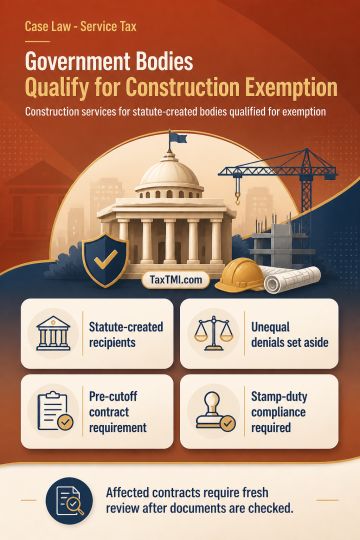
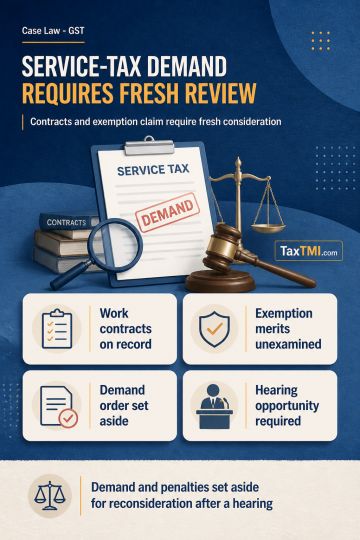
Governmental authority status supports construction-service exemption, while pre-cutoff contract and stamp-duty compliance requires verification on re...
Automated Free Sale and Commerce Certificates enable paperless processing while retaining risk-based manual verification for selected exporter applica...
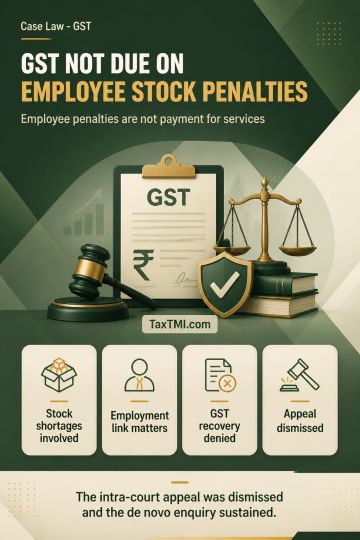
Employee stock-shortage penalties do not constitute consideration for services, preventing GST collection under Schedule II in employment relationship...
The assessee claimed exemption from long-term capital gains tax on the sale of agricultural land situated beyond the prescribed distance from municipal limits. The Assessing Officer (AO) accepted the assessee's claim without proper inquiry or verification from relevant authorities like the District Town Planner (DTP). The Principal Commissioner of Income Tax (PCIT) invoked Section 263, holding the AO's order erroneous as it lacked inquiry and application of mind. The High Court upheld the PCIT's order, observing that the AO failed to conduct any inquiry to verify the land's agricultural status and distance from municipal limits. The AO relied solely on a self-serving statement from the assessee without corroborating evidence. The Court ruled that the AO's order was erroneous and prejudicial to revenue interests due to lack of effective inquiry and non-application of mind, justifying revision u/s 263.
The assessee claimed exemption from long-term capital gains tax on the sale of agricultural land situated beyond the prescribed distance from municipal limits. The Assessing Officer (AO) accepted the assessee's claim without proper inquiry or verification from relevant authorities like the District Town Planner (DTP). The Principal Commissioner of Income Tax (PCIT) invoked Section 263, holding the AO's order erroneous as it lacked inquiry and application of mind. The High Court upheld the PCIT's order, observing that the AO failed to conduct any inquiry to verify the land's agricultural status and distance from municipal limits. The AO relied solely on a self-serving statement from the assessee without corroborating evidence. The Court ruled that the AO's order was erroneous and prejudicial to revenue interests due to lack of effective inquiry and non-application of mind, justifying revision u/s 263.
Note: It is a system-generated summary and is for quick reference only.
 TaxTMI
  TaxTMI
 of 4828







 Join Channel


