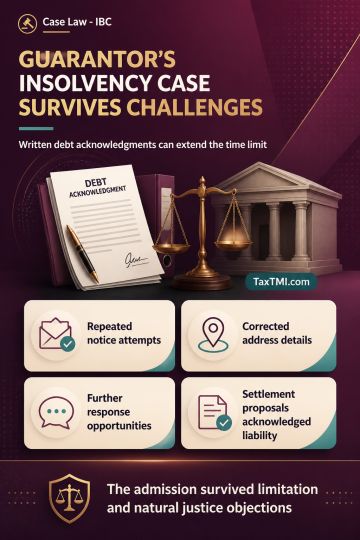
Service of notice and contractual debt acknowledgment preserved insolvency admission against a corporate guarantor despite limitation and natural just...
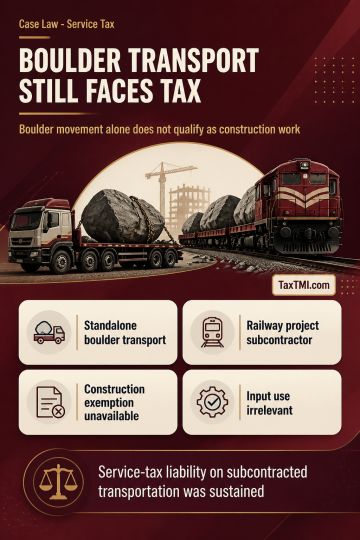
Original works exemption excludes standalone boulder transportation, leaving subcontracted railway-project transport services subject to service tax l...
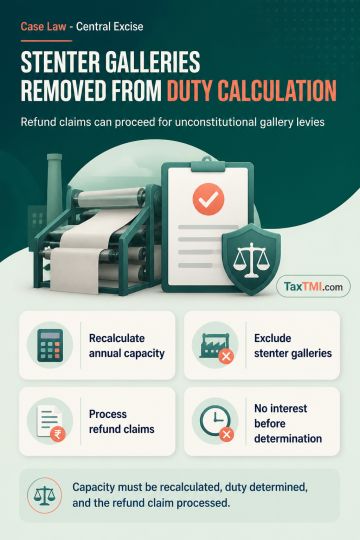
Annual production capacity determinations excluding stenter galleries support refunds for unconstitutional excise levies without an unjust-enrichment ...
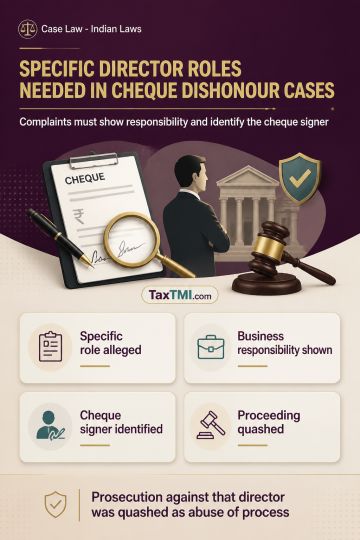
Vicarious liability for cheque dishonour requires specific allegations of responsibility and cheque signatory; generic director allegations cannot sus...
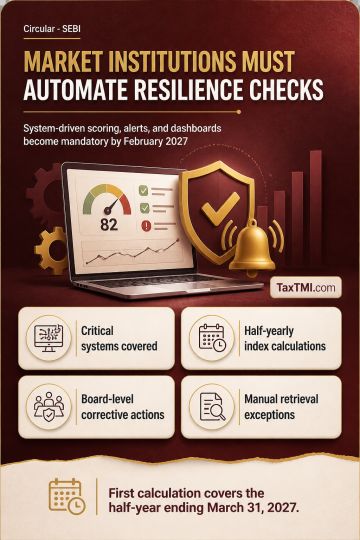
IT Resilience Index requires market infrastructure institutions to automate resilience scoring, early warnings, and continuous service-delivery monito...
The assessee claimed exemption from long-term capital gains tax on the sale of agricultural land situated beyond the prescribed distance from municipal limits. The Assessing Officer (AO) accepted the assessee's claim without proper inquiry or verification from relevant authorities like the District Town Planner (DTP). The Principal Commissioner of Income Tax (PCIT) invoked Section 263, holding the AO's order erroneous as it lacked inquiry and application of mind. The High Court upheld the PCIT's order, observing that the AO failed to conduct any inquiry to verify the land's agricultural status and distance from municipal limits. The AO relied solely on a self-serving statement from the assessee without corroborating evidence. The Court ruled that the AO's order was erroneous and prejudicial to revenue interests due to lack of effective inquiry and non-application of mind, justifying revision u/s 263.
The assessee claimed exemption from long-term capital gains tax on the sale of agricultural land situated beyond the prescribed distance from municipal limits. The Assessing Officer (AO) accepted the assessee's claim without proper inquiry or verification from relevant authorities like the District Town Planner (DTP). The Principal Commissioner of Income Tax (PCIT) invoked Section 263, holding the AO's order erroneous as it lacked inquiry and application of mind. The High Court upheld the PCIT's order, observing that the AO failed to conduct any inquiry to verify the land's agricultural status and distance from municipal limits. The AO relied solely on a self-serving statement from the assessee without corroborating evidence. The Court ruled that the AO's order was erroneous and prejudicial to revenue interests due to lack of effective inquiry and non-application of mind, justifying revision u/s 263.
Note: It is a system-generated summary and is for quick reference only.
 TaxTMI
  TaxTMI
 of 4828









 Join Channel