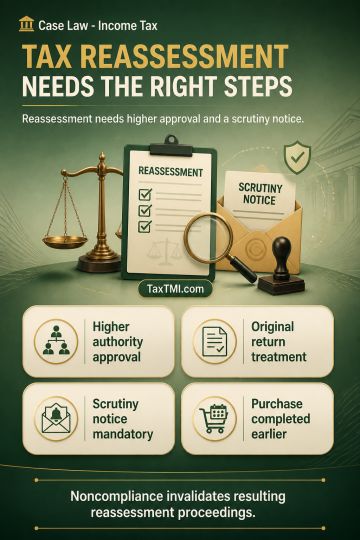
Opportunity to furnish unsecured-loan confirmations is required before reassessment initiation; proceedings require fresh consideration after taxpayer...
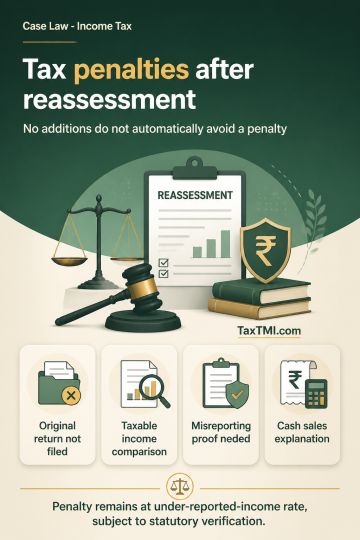
Under-reporting on a first reassessment return attracts penalty, while enhanced misreporting penalty requires proof of a statutory misreporting catego...
Form 26AS evidence requires successor-entity accounting verification after business transfer, while invoice-supported related-party advertising expend...
The assessee claimed expenditure relating to financial advisor's fees, which was disallowed u/s 57(iii) as it did not relate to earning such income. However, the CIT(A) deleted the addition, and the ITAT upheld the CIT(A)'s order, following the Supreme Court's judgment in Rajendra Prasad Moody's case, as the assessee had a legal dispute pending related to earning income during the year. Regarding the disallowance u/s 37(1) for expenses incurred on bills/vouchers, the ITAT rejected the Revenue's ground, as the AO made an ad-hoc disallowance without pointing out any specific element of such expenditure. The CIT(A) rightly deleted the ad-hoc disallowance, as the expenses were necessary and genuine for the business or profession, as substantiated by the assessee.
The assessee claimed expenditure relating to financial advisor's fees, which was disallowed u/s 57(iii) as it did not relate to earning such income. However, the CIT(A) deleted the addition, and the ITAT upheld the CIT(A)'s order, following the Supreme Court's judgment in Rajendra Prasad Moody's case, as the assessee had a legal dispute pending related to earning income during the year. Regarding the disallowance u/s 37(1) for expenses incurred on bills/vouchers, the ITAT rejected the Revenue's ground, as the AO made an ad-hoc disallowance without pointing out any specific element of such expenditure. The CIT(A) rightly deleted the ad-hoc disallowance, as the expenses were necessary and genuine for the business or profession, as substantiated by the assessee.
Note: It is a system-generated summary and is for quick reference only.
 TaxTMI
  TaxTMI
 of 4920