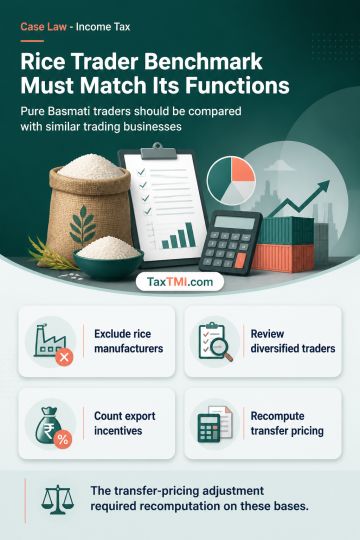
TNMM functional comparability requires excluding rice manufacturers from a pure Basmati rice trader's benchmark and recognising operating export recei...
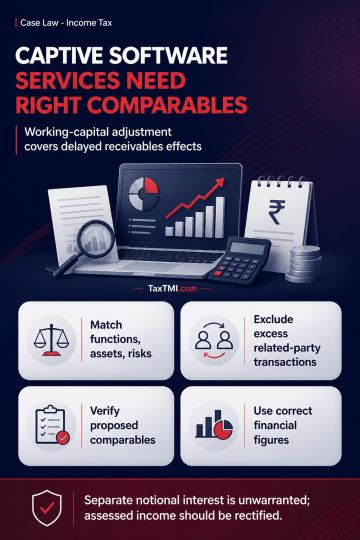
Working-capital adjustment subsumes delayed-receivable effects in TNMM benchmarking of captive software-development services, avoiding separate notion...
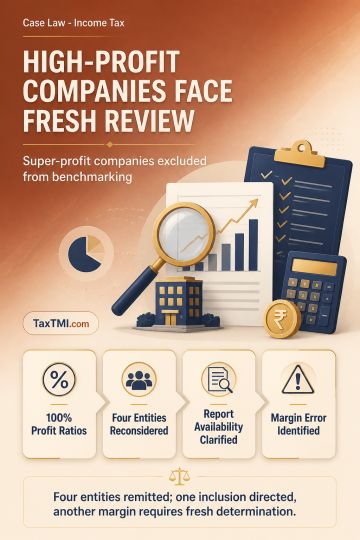
Transfer-pricing comparability requires exclusion of financially illogical super-profit comparables and correction of unsupported annual-report and ma...
Charitable character assessment preserves Section 80G approval despite inclusive spiritual teachings and incidental religious expenditure within the s...
Penalty proceedings for cash-loan acceptance require assessment proceedings and recorded Assessing Officer satisfaction; absent these, the proceedings...
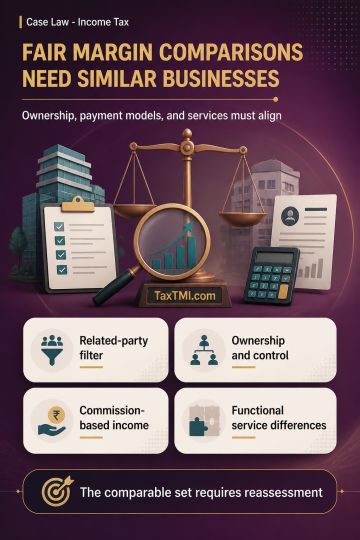
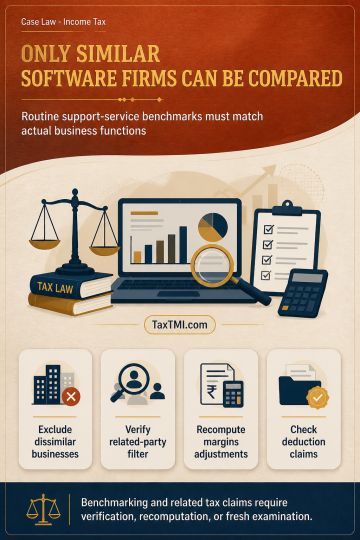
Functional comparability governs software-service benchmarking: dissimilar companies are excluded, while related-party filters, margins and working-ca...
The assessee recorded all imports in its books, but the AO presumed non-declaration based on the export-import summary data without considering credit notes. The duty paid matched, and the difference was in the gross assessable value, not the actual cost. The AO made an addition without proper verification, rejecting the assessee's explanation. Even though there was a difference in reconciling the gross assessable value, it did not lead to non-disclosure of income. The Tribunal held that the AO failed to substantiate how recording imports would result in undervaluation or suppression of income. Therefore, the issue was decided in favor of the assessee as there was no involvement of undisclosed income.
The assessee recorded all imports in its books, but the AO presumed non-declaration based on the export-import summary data without considering credit notes. The duty paid matched, and the difference was in the gross assessable value, not the actual cost. The AO made an addition without proper verification, rejecting the assessee's explanation. Even though there was a difference in reconciling the gross assessable value, it did not lead to non-disclosure of income. The Tribunal held that the AO failed to substantiate how recording imports would result in undervaluation or suppression of income. Therefore, the issue was decided in favor of the assessee as there was no involvement of undisclosed income.
Note: It is a system-generated summary and is for quick reference only.
 TaxTMI
  TaxTMI
 of 4830










 Join Channel


