Necessary-party requirements limit impleadment of independent entities, while deferred consideration does not create an appealable adverse determinati...
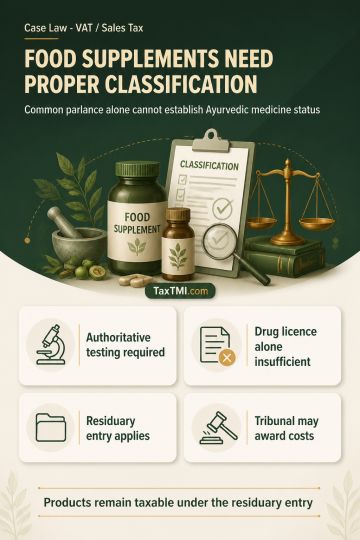
Food supplement classification requires common parlance and authoritative tests, preventing treatment as proprietary Ayurvedic medicines without suppo...
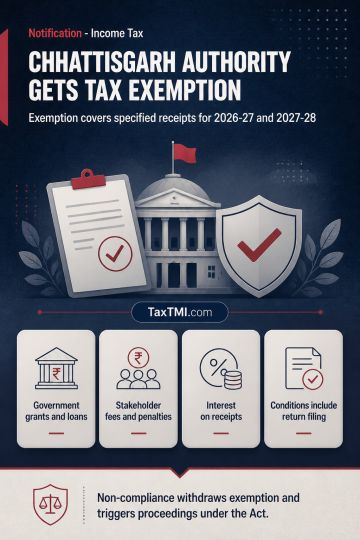
Specified regulatory authority income receives conditional tax exemption, subject to non-commercial activity, unchanged income character, and return f...
Tax exemption for regulatory authority income applies retrospectively, subject to non-commercial activity, unchanged income sources, and return-filing...
Input tax credit conditions remain constitutionally valid, with eligible recipient claims considered under GST circulars and retrospective filing dead...
Disallowing interest expenditure claimed u/s 36(1)(iii) when the assessee firm has interest-free funds and the amount overdrawn by partners. The Tribunal held that since the assessee firm had interest-free funds sufficient to cover the amounts overdrawn by partners, as evident from audited accounts, the disallowance of interest expenditure by the Assessing Officer was unjustified. The Tribunal relied on decisions of the Bombay High Court and its own coordinate Bench, which established that if an assessee has sufficient interest-free funds and advances are made without charging interest, disallowance u/s 36(1)(iii) on such advances for notional interest is not permissible. The Tribunal found no merit in the Revenue's appeal, concluding that the Assessing Officer's adverse inference was a misreading of facts contrary to documented evidence provided by the assessee.
Disallowing interest expenditure claimed u/s 36(1)(iii) when the assessee firm has interest-free funds and the amount overdrawn by partners. The Tribunal held that since the assessee firm had interest-free funds sufficient to cover the amounts overdrawn by partners, as evident from audited accounts, the disallowance of interest expenditure by the Assessing Officer was unjustified. The Tribunal relied on decisions of the Bombay High Court and its own coordinate Bench, which established that if an assessee has sufficient interest-free funds and advances are made without charging interest, disallowance u/s 36(1)(iii) on such advances for notional interest is not permissible. The Tribunal found no merit in the Revenue's appeal, concluding that the Assessing Officer's adverse inference was a misreading of facts contrary to documented evidence provided by the assessee.
Note: It is a system-generated summary and is for quick reference only.
 TaxTMI
 of 4788

















 Join Channel


 TaxTMI

