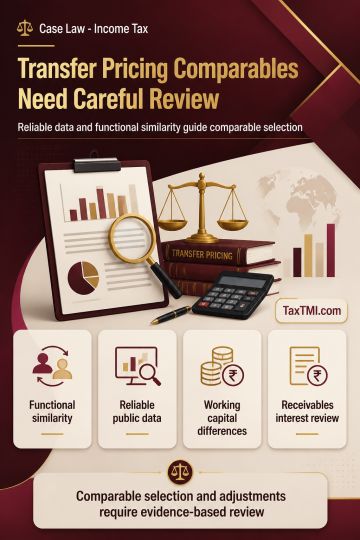
Transfer pricing comparability requires functional alignment, reliable financial data, and careful review of working capital and receivables adjustmen...
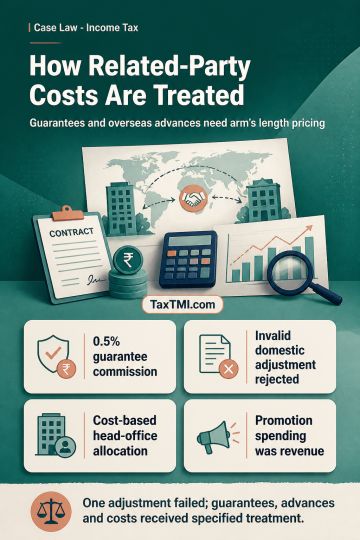
Transfer pricing rules require benchmarking corporate guarantees and associated-enterprise advances, while invalid domestic-transaction adjustments ca...
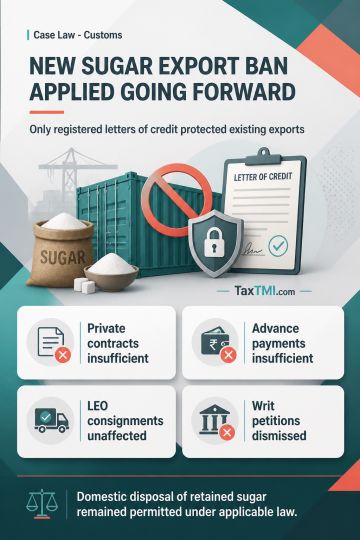
Prospective sugar export prohibition required registered letters of credit; private contracts and export quotas created no enforceable continuation ri...
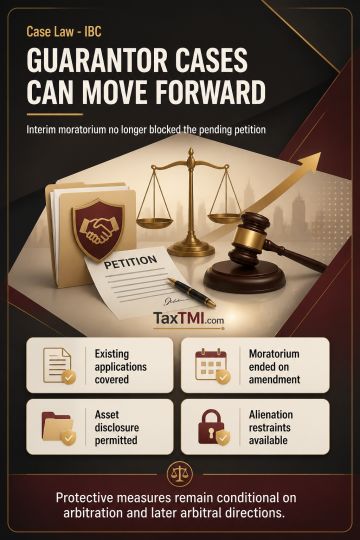
Retroactive interim-moratorium exclusion permits protective asset disclosure and preservation measures against personal guarantors pending arbitration...
Disallowing interest expenditure claimed u/s 36(1)(iii) when the assessee firm has interest-free funds and the amount overdrawn by partners. The Tribunal held that since the assessee firm had interest-free funds sufficient to cover the amounts overdrawn by partners, as evident from audited accounts, the disallowance of interest expenditure by the Assessing Officer was unjustified. The Tribunal relied on decisions of the Bombay High Court and its own coordinate Bench, which established that if an assessee has sufficient interest-free funds and advances are made without charging interest, disallowance u/s 36(1)(iii) on such advances for notional interest is not permissible. The Tribunal found no merit in the Revenue's appeal, concluding that the Assessing Officer's adverse inference was a misreading of facts contrary to documented evidence provided by the assessee.
Disallowing interest expenditure claimed u/s 36(1)(iii) when the assessee firm has interest-free funds and the amount overdrawn by partners. The Tribunal held that since the assessee firm had interest-free funds sufficient to cover the amounts overdrawn by partners, as evident from audited accounts, the disallowance of interest expenditure by the Assessing Officer was unjustified. The Tribunal relied on decisions of the Bombay High Court and its own coordinate Bench, which established that if an assessee has sufficient interest-free funds and advances are made without charging interest, disallowance u/s 36(1)(iii) on such advances for notional interest is not permissible. The Tribunal found no merit in the Revenue's appeal, concluding that the Assessing Officer's adverse inference was a misreading of facts contrary to documented evidence provided by the assessee.
Note: It is a system-generated summary and is for quick reference only.
 TaxTMI
 of 4786







 Join Channel


 TaxTMI