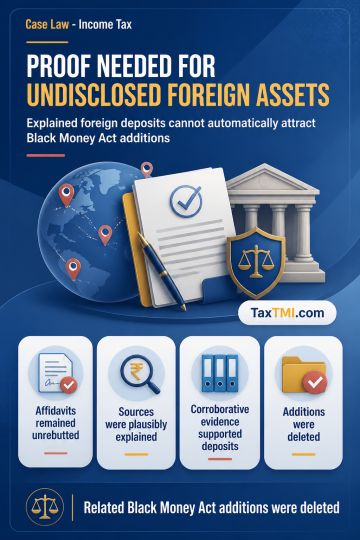
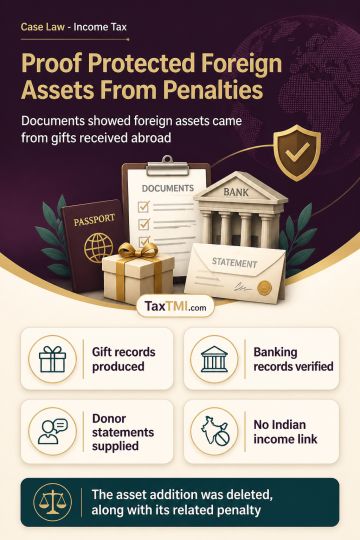
Undisclosed foreign asset classification requires an unexplained source; unrebutted affidavits and corroborative evidence defeated the Black Money Act...
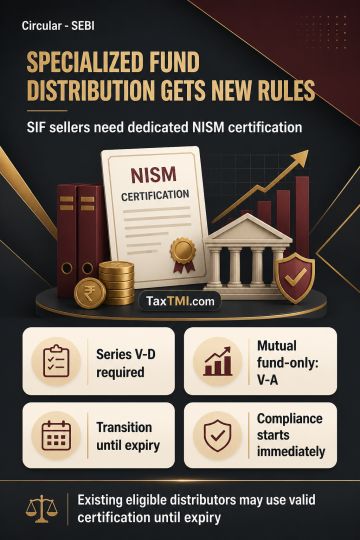
Specialized Investment Fund distribution now requires dedicated certification, while transitional recognition preserves existing qualified distributor...
One appeal filed by the Revenue against 7 Bills of Entry is not maintainable. As per Rule 6(A) of the CESTAT Procedure Rules, 1982, when the Commissioner (Appeals) passes a common order-in-appeal disposing of appeals covering multiple Bills of Entry, the appellant is required to file separate appeals for each Bill of Entry, as each Bill of Entry is an assessment order in itself. This interpretation aligns with the Ahmedabad Bench's ruling in CMR Nikkie India Pvt Ltd case and the Jammu & Kashmir High Court's interpretation in CGST & CE, Jammu vs. M/s Narbada Industries case, which clarified that monetary thresholds apply to individual appeals, not the aggregate amount. Consequently, the Revenue is directed to file 7 separate appeals instead of one appeal if they wish to challenge the common order-in-appeal.
One appeal filed by the Revenue against 7 Bills of Entry is not maintainable. As per Rule 6(A) of the CESTAT Procedure Rules, 1982, when the Commissioner (Appeals) passes a common order-in-appeal disposing of appeals covering multiple Bills of Entry, the appellant is required to file separate appeals for each Bill of Entry, as each Bill of Entry is an assessment order in itself. This interpretation aligns with the Ahmedabad Bench's ruling in CMR Nikkie India Pvt Ltd case and the Jammu & Kashmir High Court's interpretation in CGST & CE, Jammu vs. M/s Narbada Industries case, which clarified that monetary thresholds apply to individual appeals, not the aggregate amount. Consequently, the Revenue is directed to file 7 separate appeals instead of one appeal if they wish to challenge the common order-in-appeal.
Note: It is a system-generated summary and is for quick reference only.
 TaxTMI
 of 4788





 Join Channel


 TaxTMI