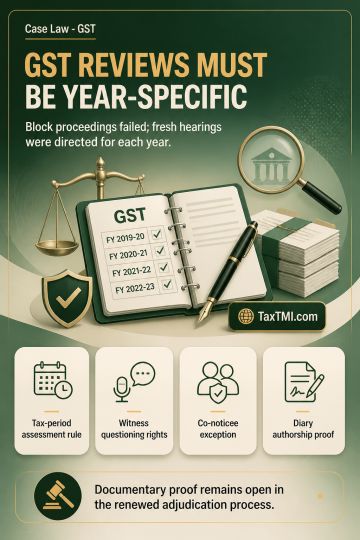
Cooperative society deposits, member-interest TDS exemption and credit-facility deduction claims require verification through records and supporting e...
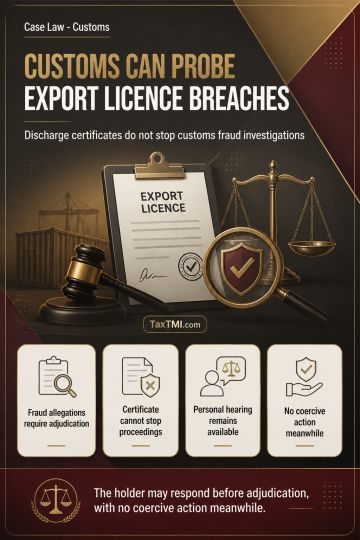
Customs jurisdiction over EPCG condition breaches survives export-obligation discharge certificates, requiring alleged fraud and misdeclaration to be ...
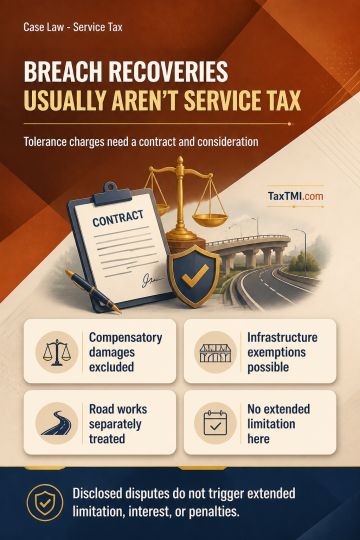
Contractual tolerance requires consideration; breach recoveries, qualifying public infrastructure services and road works escape service tax liability...
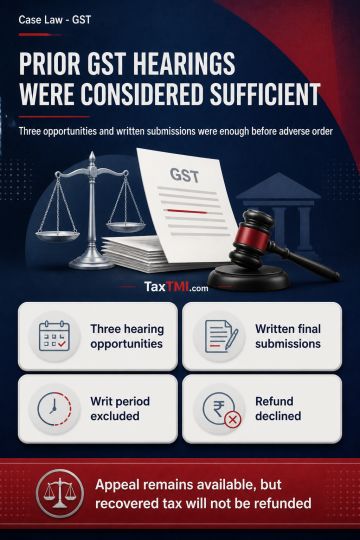
Personal hearing requirements in GST adjudication were satisfied by prior opportunities and written submissions; appellate limitation received writ-pe...
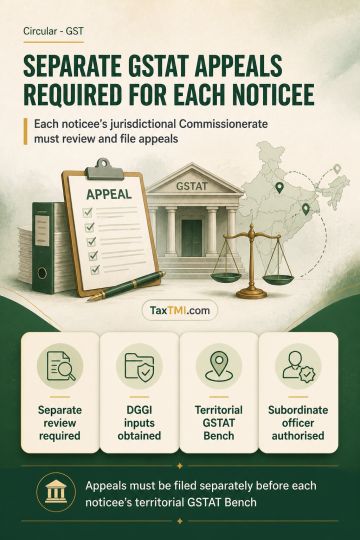
One appeal filed by the Revenue against 7 Bills of Entry is not maintainable. As per Rule 6(A) of the CESTAT Procedure Rules, 1982, when the Commissioner (Appeals) passes a common order-in-appeal disposing of appeals covering multiple Bills of Entry, the appellant is required to file separate appeals for each Bill of Entry, as each Bill of Entry is an assessment order in itself. This interpretation aligns with the Ahmedabad Bench's ruling in CMR Nikkie India Pvt Ltd case and the Jammu & Kashmir High Court's interpretation in CGST & CE, Jammu vs. M/s Narbada Industries case, which clarified that monetary thresholds apply to individual appeals, not the aggregate amount. Consequently, the Revenue is directed to file 7 separate appeals instead of one appeal if they wish to challenge the common order-in-appeal.
One appeal filed by the Revenue against 7 Bills of Entry is not maintainable. As per Rule 6(A) of the CESTAT Procedure Rules, 1982, when the Commissioner (Appeals) passes a common order-in-appeal disposing of appeals covering multiple Bills of Entry, the appellant is required to file separate appeals for each Bill of Entry, as each Bill of Entry is an assessment order in itself. This interpretation aligns with the Ahmedabad Bench's ruling in CMR Nikkie India Pvt Ltd case and the Jammu & Kashmir High Court's interpretation in CGST & CE, Jammu vs. M/s Narbada Industries case, which clarified that monetary thresholds apply to individual appeals, not the aggregate amount. Consequently, the Revenue is directed to file 7 separate appeals instead of one appeal if they wish to challenge the common order-in-appeal.
Note: It is a system-generated summary and is for quick reference only.
 TaxTMI
 of 4784




 Join Channel


 TaxTMI