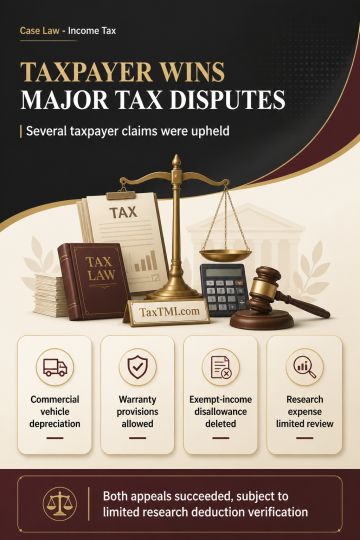
Commercial vehicle depreciation, scientifically determined warranty provisions and exempt-income disallowances were resolved in favour of the taxpayer...
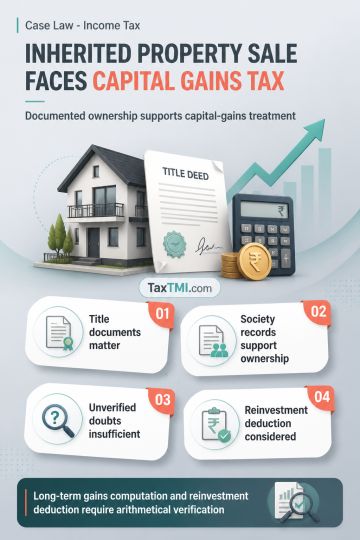
Inherited property sale proceeds require capital-gains treatment where ownership is supported by evidence, not suspicion or unverified signature doubt...
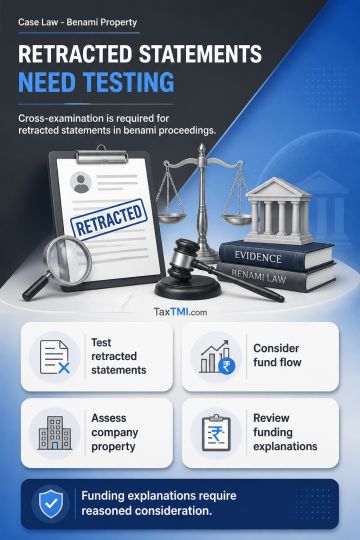
Cross-examination of retracted statements is essential where foundational evidence supports a benami allegation and documented funding explanations re...
Capital-goods exemption covers plant-modernisation accessories, while the import restriction applies only to earlier capital-goods components and spar...
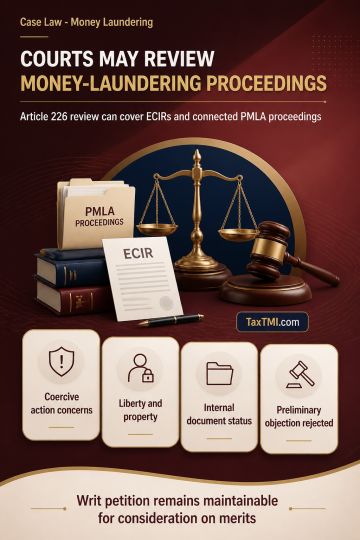
Constitutional judicial review permits challenges to ECIRs and connected money-laundering proceedings where coercive action affects fundamental intere...
One appeal filed by the Revenue against 7 Bills of Entry is not maintainable. As per Rule 6(A) of the CESTAT Procedure Rules, 1982, when the Commissioner (Appeals) passes a common order-in-appeal disposing of appeals covering multiple Bills of Entry, the appellant is required to file separate appeals for each Bill of Entry, as each Bill of Entry is an assessment order in itself. This interpretation aligns with the Ahmedabad Bench's ruling in CMR Nikkie India Pvt Ltd case and the Jammu & Kashmir High Court's interpretation in CGST & CE, Jammu vs. M/s Narbada Industries case, which clarified that monetary thresholds apply to individual appeals, not the aggregate amount. Consequently, the Revenue is directed to file 7 separate appeals instead of one appeal if they wish to challenge the common order-in-appeal.
One appeal filed by the Revenue against 7 Bills of Entry is not maintainable. As per Rule 6(A) of the CESTAT Procedure Rules, 1982, when the Commissioner (Appeals) passes a common order-in-appeal disposing of appeals covering multiple Bills of Entry, the appellant is required to file separate appeals for each Bill of Entry, as each Bill of Entry is an assessment order in itself. This interpretation aligns with the Ahmedabad Bench's ruling in CMR Nikkie India Pvt Ltd case and the Jammu & Kashmir High Court's interpretation in CGST & CE, Jammu vs. M/s Narbada Industries case, which clarified that monetary thresholds apply to individual appeals, not the aggregate amount. Consequently, the Revenue is directed to file 7 separate appeals instead of one appeal if they wish to challenge the common order-in-appeal.
Note: It is a system-generated summary and is for quick reference only.
 TaxTMI
 of 4780









 Join Channel


 TaxTMI
